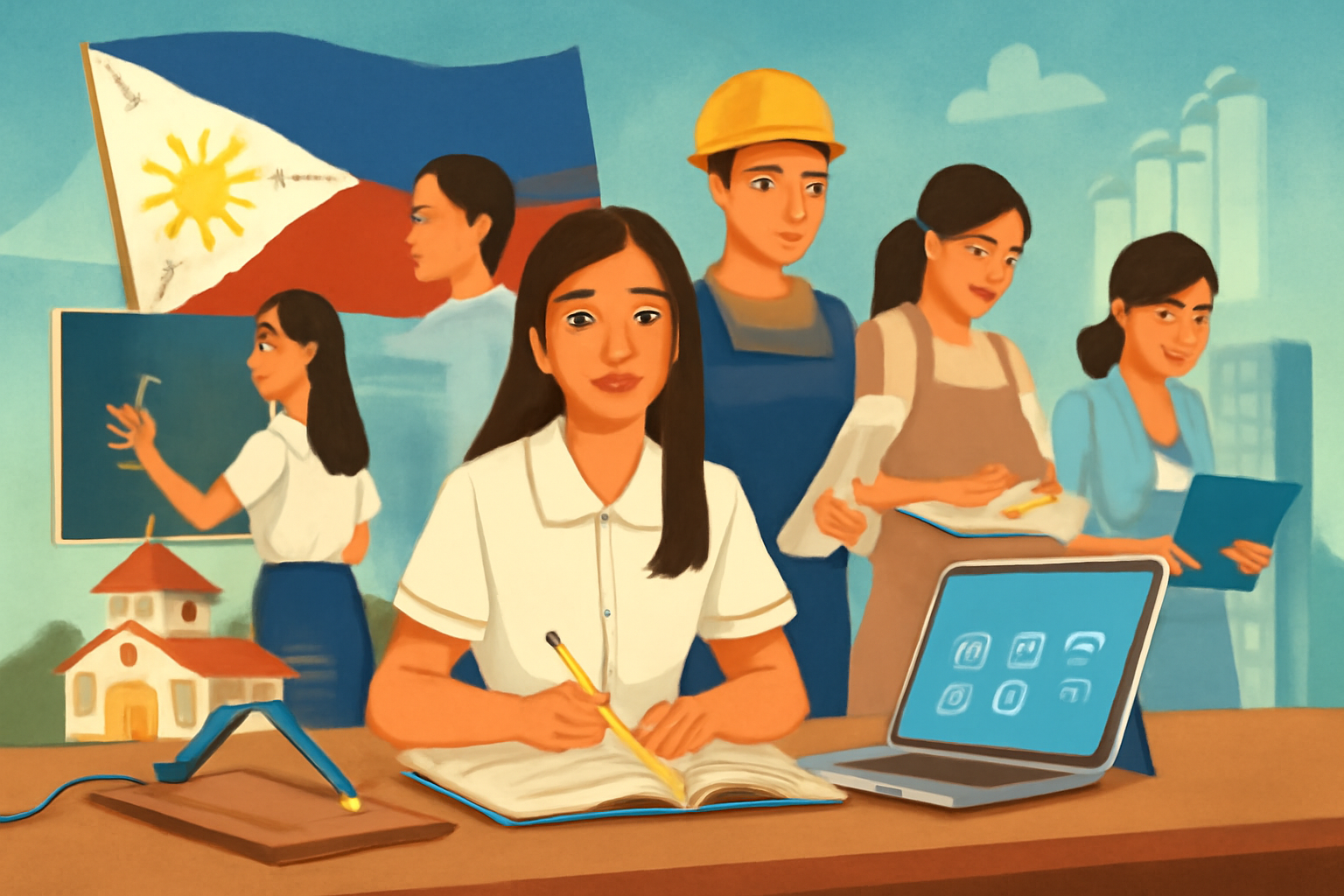
Education in the Philippines is undergoing significant changes to ensure that future generations are competitive and ready to take on the challenges of the global job market. As industries around the world become more complex and interdependent, it is crucial that Filipino students develop the necessary skills to succeed in this dynamic environment.
The K-12 educational reform, which was implemented in 2013, was a major turning point in the country’s education system. The new 12-year basic education cycle provides students with more time to prepare for the demands of higher education or the workforce. The addition of two years of senior high school gives students the option to specialize in academic subjects or to pursue technical-vocational education, offering them more choices and opportunities to gain valuable skills.
This multi-track approach is essential in creating a diverse and competitive workforce. The academic track offers students the chance to delve deeper into subjects that prepare them for college and professional careers, while the technical-vocational track focuses on equipping students with practical skills that are in high demand in sectors such as information technology, hospitality, and healthcare. This system is designed to address both the country’s need for skilled professionals and the growing demand for workers in technical fields.
In addition to these curriculum reforms, technology plays a significant role in shaping the future of education in the Philippines. Schools are increasingly adopting digital tools and online learning platforms to enhance student learning. These tools help develop critical skills, such as creativity, collaboration, and communication, which are crucial in today’s fast-paced, technology-driven world.
Despite these advancements, the Philippine education system still faces challenges. One of the key issues is the disparity in access to quality education between urban and rural areas. While schools in major cities often have access to advanced technology and resources, students in remote areas may struggle to get the education they need to succeed. To tackle these disparities, the government is working to improve educational access in underserved areas, focusing on infrastructure, technology, and teacher development.
Through continuous investment in education, the Philippines aims to nurture a future generation of competitive, skilled professionals capable of leading the nation toward economic growth and innovation. With an emphasis on both academic knowledge and practical skills, the country is laying the foundation for a brighter, more prosperous future.