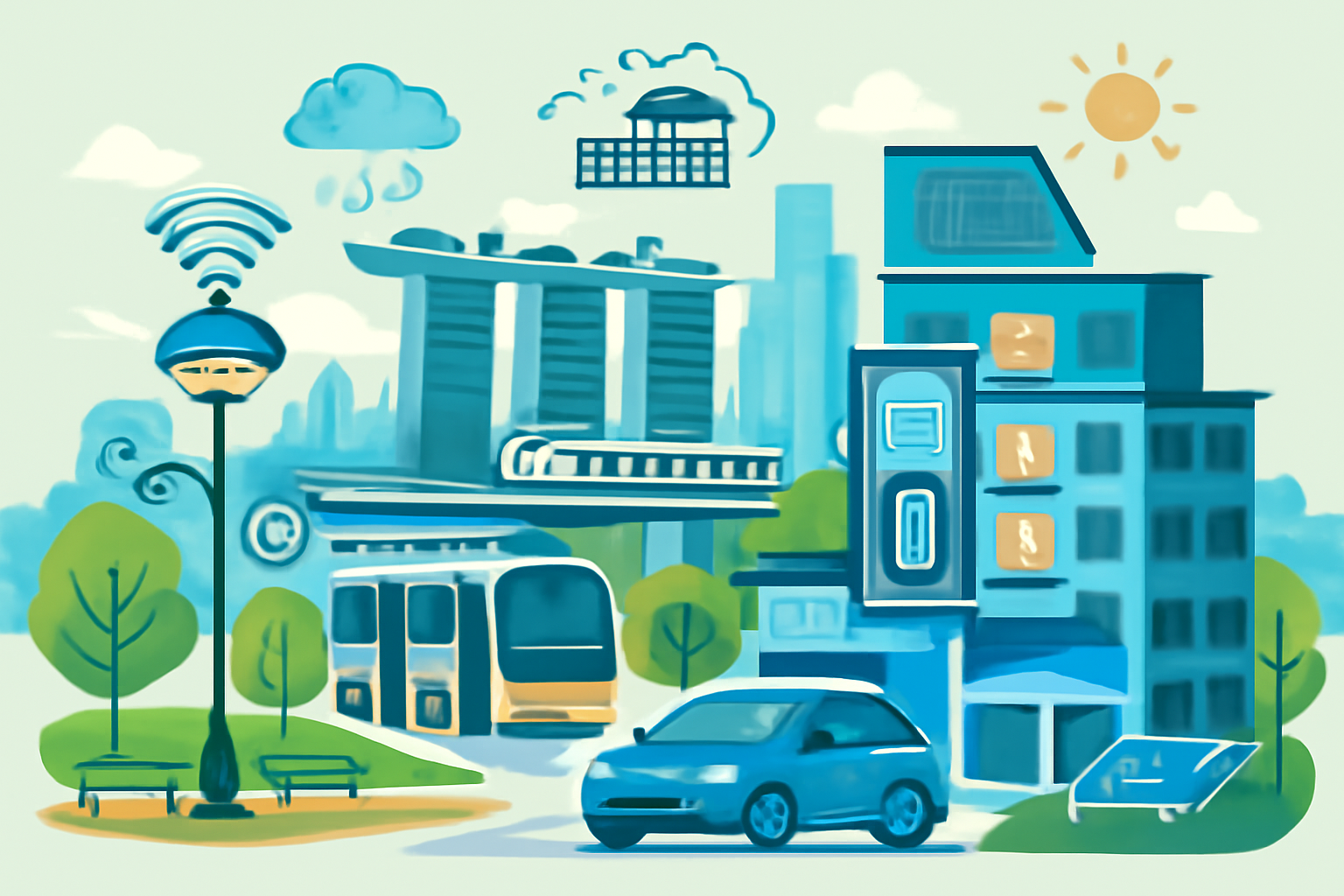
Singapore’s transformation into a smart city has redefined urban living, with technology becoming an essential part of daily life. From automated systems managing traffic to smart homes that conserve energy, technology is deeply integrated into the city’s infrastructure, creating a more convenient and sustainable environment for its residents.
A key aspect of Singapore’s smart city initiatives is its widespread use of data analytics. The city is equipped with an extensive network of sensors that monitor various urban parameters such as traffic density, air pollution levels, and even weather conditions. By analyzing this data in real time, the government can make informed decisions that improve resource management and optimize city services.
Transportation is one area where technology is having a significant impact. Singapore has implemented a variety of smart transportation solutions, including intelligent traffic systems that adjust to real-time traffic conditions. These systems help reduce congestion, ensuring smoother travel for all. Additionally, Singapore’s MRT and bus networks are integrated with smart systems that provide passengers with live updates on schedules and travel times, improving the overall public transportation experience.
The concept of smart homes is rapidly gaining popularity in Singapore. Many residential buildings are now equipped with IoT devices that allow homeowners to manage various aspects of their living environment, such as lighting, air conditioning, and security systems, from their smartphones. These technologies not only enhance convenience but also contribute to energy savings by enabling more efficient use of resources.
Sustainability is another focal point of Singapore’s smart city vision. The city is committed to reducing its carbon footprint by adopting green technologies, such as solar power and smart grids. Solar panels are increasingly common on rooftops, while smart grids monitor energy usage in real time, ensuring that electricity is distributed more efficiently and reducing waste.
Public spaces in Singapore have also been upgraded with technology. In parks and outdoor areas, sensors monitor environmental data, which is made available to the public via mobile apps. This allows residents to stay informed about air quality and weather conditions, promoting healthier outdoor activities and encouraging a deeper connection with nature.
Singapore’s smart city model demonstrates how technology can be used to create a more efficient, sustainable, and comfortable urban environment. Through its use of data, advanced transportation systems, and green technologies, the city is paving the way for the future of urban living.