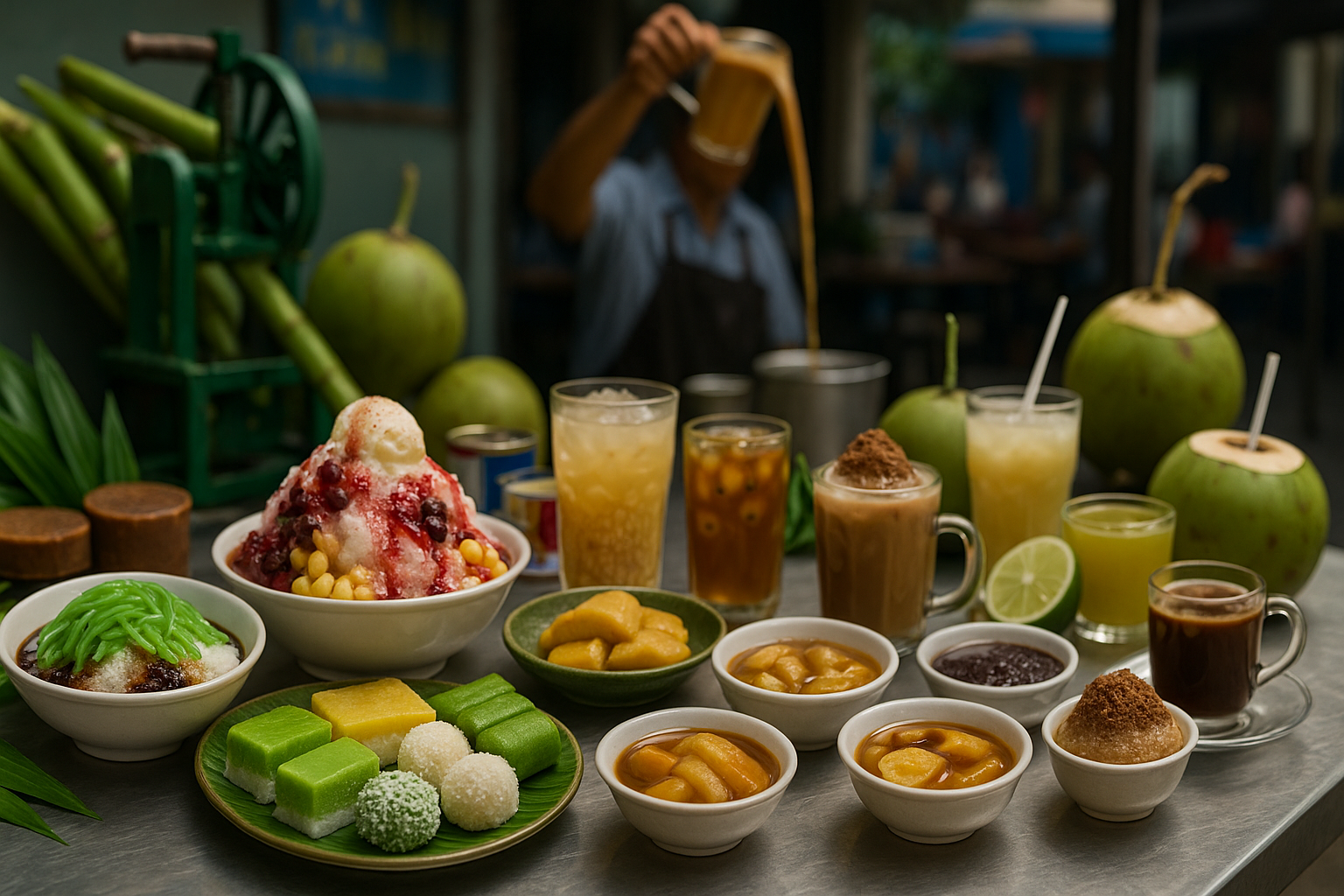
Malaysia’s hawker scene is more than curbside eating; it’s an ecosystem. Wet markets supply dawn-fresh produce; family-run stalls refine one or two specialties over decades; kopitiam owners provide tables, drinks, and a social anchor. The result is a decentralized network where quality thrives on repetition, competition, and community memory.
A typical kopitiam hosts multiple independent vendors. You order char kway teow at one cart, curry laksa at another, then drinks from the coffee counter. Payment may be per stall or consolidated—watch what locals do. At nasi campur and economy rice, you point at trays of stir-fries, curries, and sambals; the vendor tallies your plate by item. Language is rarely a barrier: pointing works, and phrases like “kurang pedas” (less spicy), “tak pedas” (not spicy), “makan sini” (eat here), and “tapau” (to-go) carry you far.
Heat is the hawker’s secret currency. Wok hei comes from blistering temperatures, enough oil to transmit heat, and speed—seconds matter. That’s why portions are often individual: the wok can only properly sear a small batch. Noodle stalls pre-boil, then finish to order; laksa vendors keep separate broths for clarity and consistency. Satay grillers manage ember beds like conductors, balancing flame and smoke to char without drying.
Hygiene and turnover matter. Busy lines indicate freshness and rapid stock movement. You’ll see hawkers blanching noodles in wire baskets, skimming broths, and refreshing cutting boards. Plastic stools and open-air fans keep costs low; your bill reflects ingredients and craft rather than décor. Halal considerations shape geography: Malay and mamak stalls are halal; some Chinese stalls use pork or lard—look for signage and ask when unsure.
Timing is strategic. Breakfast favors kaya toast, soft-boiled eggs, nasi lemak, and roti canai. Lunch crowds descend on economic rice and noodle specialists, while late nights belong to mamak stalls serving maggi goreng, tandoori chicken, and teh tarik beneath football broadcasts. Night markets (pasar malam) add seasonal fruits, grilled seafood, and portable snacks like apam balik and kuih.
Regions stamp identity onto the hawker map. Penang prides itself on seafood-driven noodles and tamarind-bright asam laksa. Kuala Lumpur leans into glossy Hokkien mee, claypot chicken rice, and nasi lemak with fried chicken. Melaka showcases Nyonya laksa and gula Melaka desserts. In Kuching, kolok mee and Sarawak laksa rule; in Kota Kinabalu, hinava, ngiu chap (beef noodles), and grilled fish dominate.
Think of hawker culture as open-source dining. Recipes evolve in public, shaped by hands-on feedback from a thousand regulars. Your role? Be curious, order widely, tweak with condiments, and respect the craft. The best seat is whichever one faces a sizzling wok.