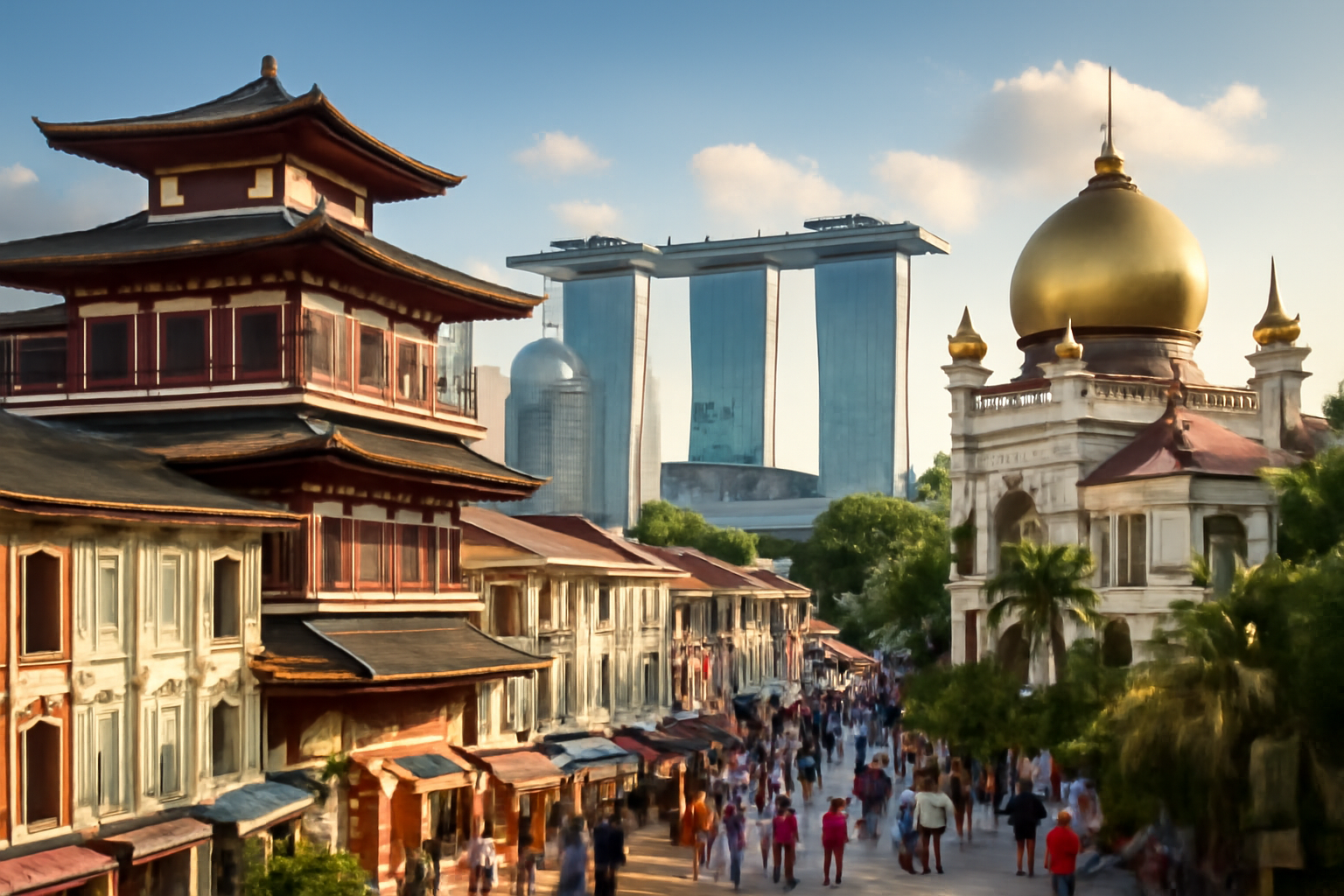
Singapore’s remarkable growth as a global hub for business, technology, and tourism is well-known, but what truly sets the country apart is its ability to preserve cultural traditions while embracing modernity. Social life in Singapore reflects this balance, where ancient customs coexist effortlessly with futuristic advancements, creating a society that is as forward-looking as it is historically aware.
Cultural Diversity as a Cornerstone of Social Life
Singapore is one of the most culturally diverse countries in the world. With its large Chinese, Malay, Indian, and Eurasian populations, the city-state has nurtured a society where different cultures and religions can coexist in harmony. Major cultural festivals such as the Chinese Lunar New Year, Hari Raya Puasa, Deepavali, and Christmas are celebrated with immense fervor, with each community proudly showcasing its cultural practices and traditions.
The government has played a significant role in fostering an environment of racial and religious tolerance, where different ethnic communities are encouraged to integrate and respect one another’s differences. This inclusive attitude is reflected in the everyday social life of Singaporeans, who embrace the idea that their diversity is a strength rather than a point of division. Cultural districts such as Chinatown, Little India, and Kampong Glam are key reminders of the city’s rich history, allowing Singaporeans to appreciate their shared cultural legacy while embracing new trends and ideas.
Modernity and Innovation in a Traditional Setting
While Singapore takes pride in its multicultural traditions, it is also recognized for its leadership in modern urban development. The country has invested heavily in technology and sustainability, evident in its world-renowned infrastructure, like the Marina Bay Sands, the Gardens by the Bay, and the Jewel Changi Airport. These modern developments not only highlight Singapore’s commitment to innovation but also integrate environmentally sustainable practices, demonstrating the country’s forward-thinking approach to urban planning.
Despite its rapid modernization, Singapore remains steadfast in its commitment to preserving its historical landmarks. The government’s careful planning has allowed for the integration of new infrastructure with old buildings, creating a harmonious blend of the old and the new. This approach has enabled Singapore to maintain its unique cultural identity while advancing technologically.
The Role of Tradition in Modern-Day Singapore
Family values are still a fundamental aspect of social life in Singapore. While the country encourages professional success and individual ambition, it also places significant importance on respecting family, maintaining close-knit relationships, and honoring elders. This respect for family and community is ingrained in everyday life, from family gatherings to the celebration of cultural holidays.
Singaporeans are also taught to strike a balance between maintaining strong cultural ties and pursuing their dreams. The country’s rigorous educational system instills both academic knowledge and ethical values, equipping students to excel in their careers while remaining connected to their cultural heritage. This dual approach of honoring tradition while encouraging progress ensures that Singaporeans grow up in a society that values both the past and the future.
Conclusion
Singapore’s social life is a dynamic fusion of its cultural heritage and its modern, cosmopolitan environment. The country’s ability to honor its traditions while embracing technological innovation and global connectivity serves as a testament to its social success. Singapore’s unique model of integrating the old with the new offers valuable insights into how modern societies can grow while preserving their cultural identity.