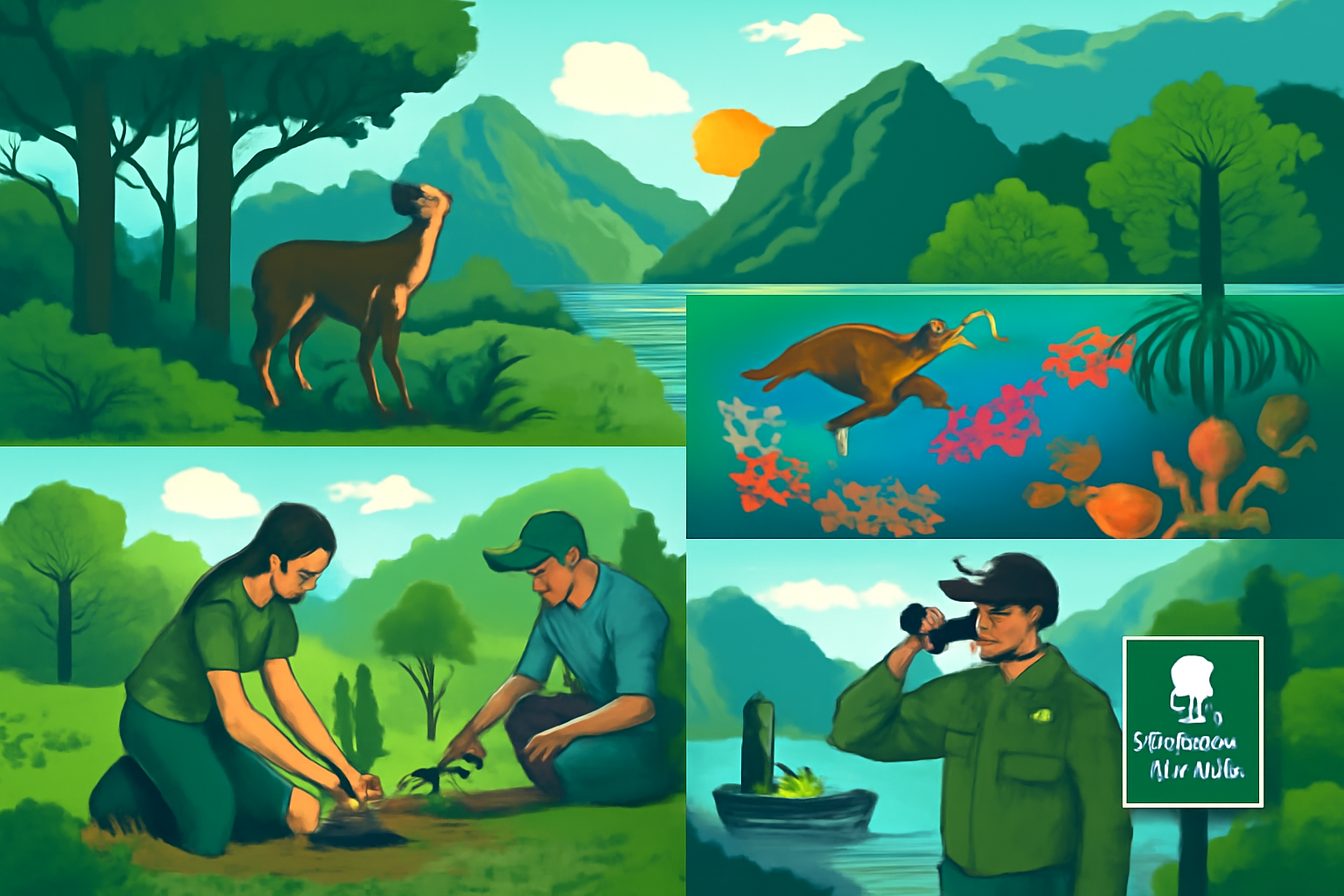
The Philippines, an archipelago consisting of over 7,000 islands, is home to some of the world’s most unique and diverse ecosystems. From the towering mountains and lush rainforests to the rich coral reefs and marine biodiversity, the country’s natural environment is a treasure trove of life. Unfortunately, rapid urbanization, illegal logging, and overfishing have put immense pressure on these ecosystems. To address these issues, the Philippines has implemented a variety of conservation programs aimed at safeguarding its natural resources.
The National Integrated Protected Areas System (NIPAS) Law is one of the government’s most effective tools in preserving the country’s biodiversity. By establishing protected areas across the nation, the law ensures that important ecosystems are preserved for future generations. Protected areas such as the Taal Volcano Protected Landscape and the Tubbataha Reefs are vital for maintaining the health of both terrestrial and marine species.
Another key conservation initiative in the Philippines is the National Greening Program (NGP). Launched in 2011, this initiative aims to reforest degraded areas and improve the country’s forest cover. The NGP has been instrumental in planting millions of trees and restoring ecosystems that were once at risk of disappearing. This program not only helps conserve biodiversity but also contributes to climate change mitigation by sequestering carbon from the atmosphere.
Marine conservation is also a priority in the Philippines, which is home to one of the most diverse marine ecosystems in the world. The country’s coral reefs are under threat from illegal fishing and destructive practices such as dynamite fishing. In response, the Philippines has established marine protected areas (MPAs) to safeguard coral reefs, seagrasses, and mangrove forests. These areas are crucial for maintaining fish stocks and protecting coastal communities from the impacts of storms and rising sea levels.
While significant progress has been made in the Philippines’ conservation efforts, the country faces numerous challenges, including illegal activities, climate change, and limited resources for enforcement. However, ongoing efforts from the government, NGOs, and local communities continue to make a difference in protecting the country’s rich natural heritage.