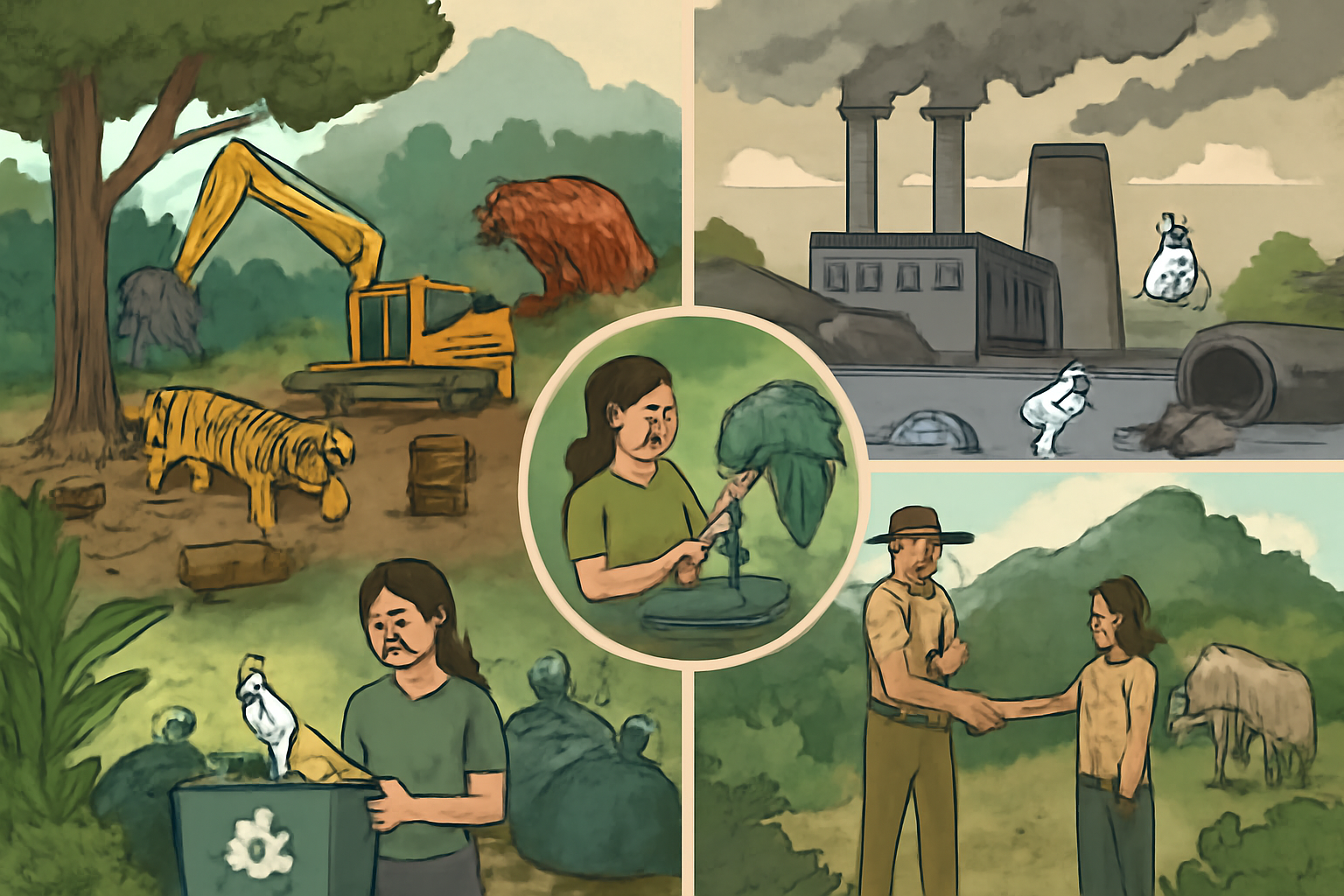
As one of the world’s biodiversity hotspots, Malaysia’s environment faces numerous challenges. Deforestation, pollution, and climate change are threatening its ecosystems and wildlife. However, significant efforts are underway to combat these environmental issues through conservation and sustainable development strategies.
The Issue of Deforestation
Deforestation in Malaysia, primarily driven by the expansion of palm oil plantations and logging activities, poses a serious threat to the country’s rainforests. These forests are home to a diverse range of plant and animal species, some of which are found nowhere else in the world. The loss of forest habitats endangers species like the orangutan and Malayan tiger, which are already classified as critically endangered.
Malaysia has been working towards reversing the effects of deforestation by promoting sustainable land management practices. The government is encouraging the adoption of sustainable palm oil production standards, with the RSPO certification as a benchmark for environmentally friendly practices. Additionally, Malaysia is investing in reforestation and afforestation projects to restore damaged ecosystems.
Pollution and Its Consequences
The rapid pace of industrialization in Malaysia has led to increased pollution levels in urban areas. Air pollution, water contamination, and waste accumulation have become serious environmental issues. Plastic waste, in particular, is a major concern, with Malaysia being one of the largest contributors to ocean plastic pollution.
To address these problems, Malaysia has initiated various environmental policies, including the “No Plastic Bag” campaign, aimed at reducing plastic consumption. Additionally, there are efforts to improve waste management and encourage recycling. The government is also investing in green infrastructure to reduce emissions and improve air quality in cities.
Conservation Strategies in Malaysia
Malaysia has implemented a variety of conservation programs aimed at protecting its diverse ecosystems. These initiatives focus on both terrestrial and marine ecosystems, with the establishment of national parks and marine protected areas. Taman Negara, one of the oldest tropical rainforests in the world, is a prime example of a protected area that is home to countless species.
Conservation programs in Malaysia also focus on endangered species recovery. Programs that work to protect the Malayan tiger, Bornean orangutan, and Sumatran rhinoceros are essential in preserving these iconic species. Partnerships with NGOs, local communities, and international organizations are crucial to the success of these conservation efforts.
Promoting Sustainable Practices
Malaysia is increasingly focusing on sustainable development in sectors such as agriculture, forestry, and energy. The promotion of sustainable palm oil production and the adoption of eco-friendly farming techniques are helping to minimize the environmental impact of these industries. Additionally, the government is exploring renewable energy sources to reduce dependence on fossil fuels and mitigate climate change.
By adopting sustainable practices, Malaysia aims to create a balance between development and environmental preservation, ensuring that natural resources are used responsibly and conserved for future generations.
Conclusion
While Malaysia’s environmental challenges are significant, the nation is making progress through concerted conservation efforts. Through the promotion of sustainable practices, the creation of protected areas, and public engagement, Malaysia can protect its natural heritage and work towards a sustainable future.