Singapore has established itself as a world leader in designing transportation systems that prioritize both efficiency and sustainability. The city-state’s progressive approach to urban mobility ensures that its transport network is not only effective in meeting the needs of residents but also environmentally friendly. From the MRT system to the rise of electric vehicles, Singapore’s transportation policies and infrastructure are setting a new standard for urban sustainability.
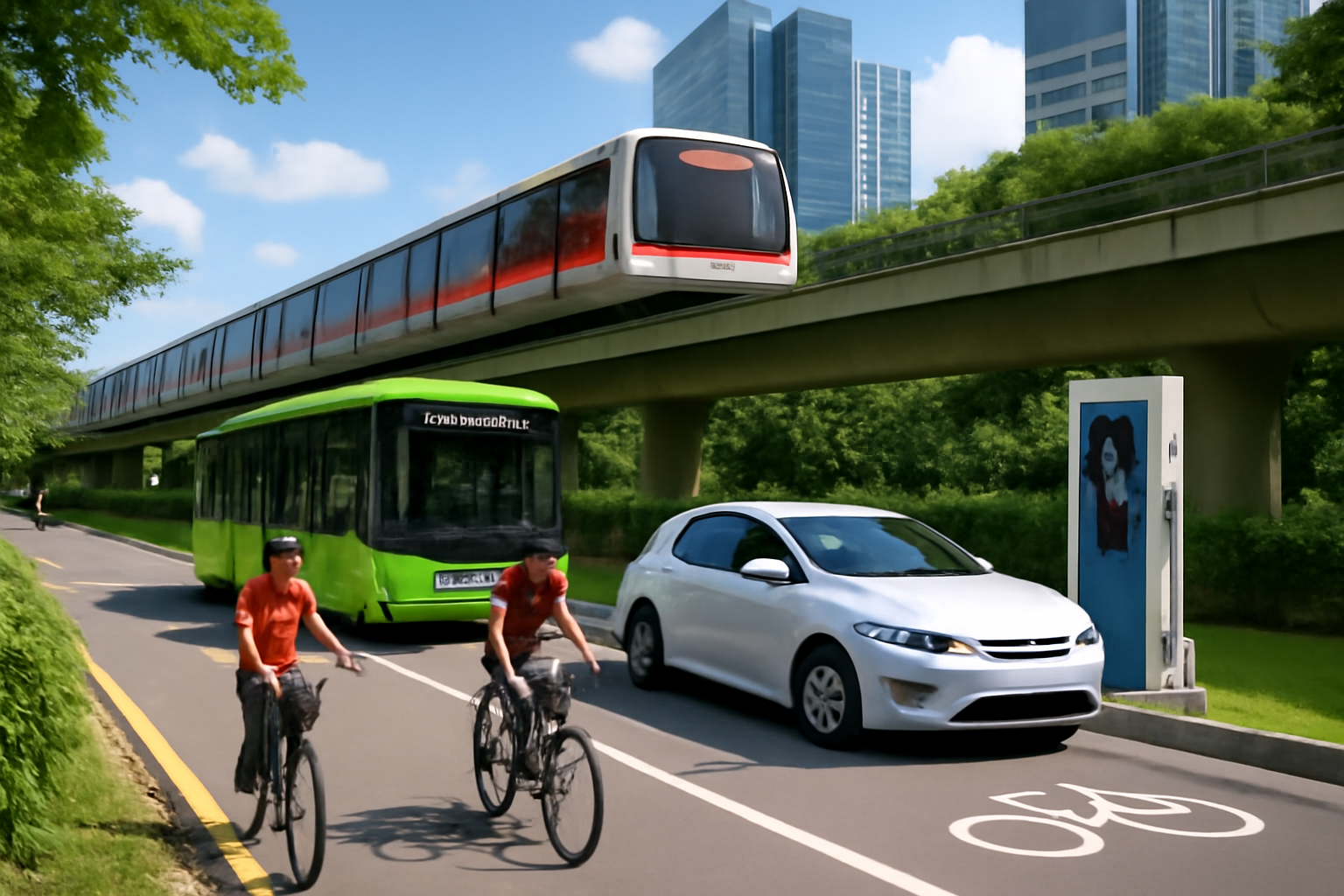
At the core of Singapore’s public transportation system is the Mass Rapid Transit (MRT). This fast, reliable, and efficient network spans the entire city and provides an ideal solution for managing the transportation needs of a dense urban population. The MRT operates with remarkable punctuality, making it the preferred choice for daily commuters. Complementing the MRT, the extensive bus system ensures comprehensive coverage of the island, allowing passengers to travel efficiently to destinations that are not directly accessible by train.
Sustainability is at the heart of Singapore’s transportation strategies. The government is working toward eliminating petrol and diesel vehicles by 2040, replacing them with electric vehicles (EVs) to reduce pollution. The shift to EVs is supported by policies that offer incentives for EV purchases, as well as the rapid expansion of EV charging infrastructure. This transition will have a profound impact on reducing the city’s carbon emissions, improving air quality, and contributing to Singapore’s long-term environmental goals.
Electric buses are also central to Singapore’s sustainability initiatives. The city has already started introducing electric buses into its public transport fleet, replacing older, more polluting diesel-powered buses. By 2040, the government aims to fully electrify its bus fleet, which will help reduce air pollution and noise levels while also contributing to the country’s carbon reduction targets.
In terms of managing traffic, Singapore uses the Electronic Road Pricing (ERP) system, a dynamic pricing model that charges drivers for using certain roads during peak periods. This system is designed to reduce congestion and incentivize public transport use, ensuring that traffic flows smoothly even in busy areas. The ERP system is one of the most advanced road pricing mechanisms in the world, making Singapore a pioneer in congestion management.
To complement the focus on public transportation, the city-state has made significant efforts to encourage walking and cycling. With a growing network of pedestrian pathways and dedicated cycling lanes, Singapore is making it easier for residents to opt for eco-friendly transportation options for shorter trips. These initiatives are an important part of the city’s broader efforts to reduce car dependency and promote sustainable mobility.
In conclusion, Singapore’s transportation system is a prime example of how urban areas can create efficient, sustainable, and future-proof mobility solutions. Through investments in public transport, the promotion of electric vehicles, and the expansion of green infrastructure, Singapore is shaping the future of urban transportation for generations to come.