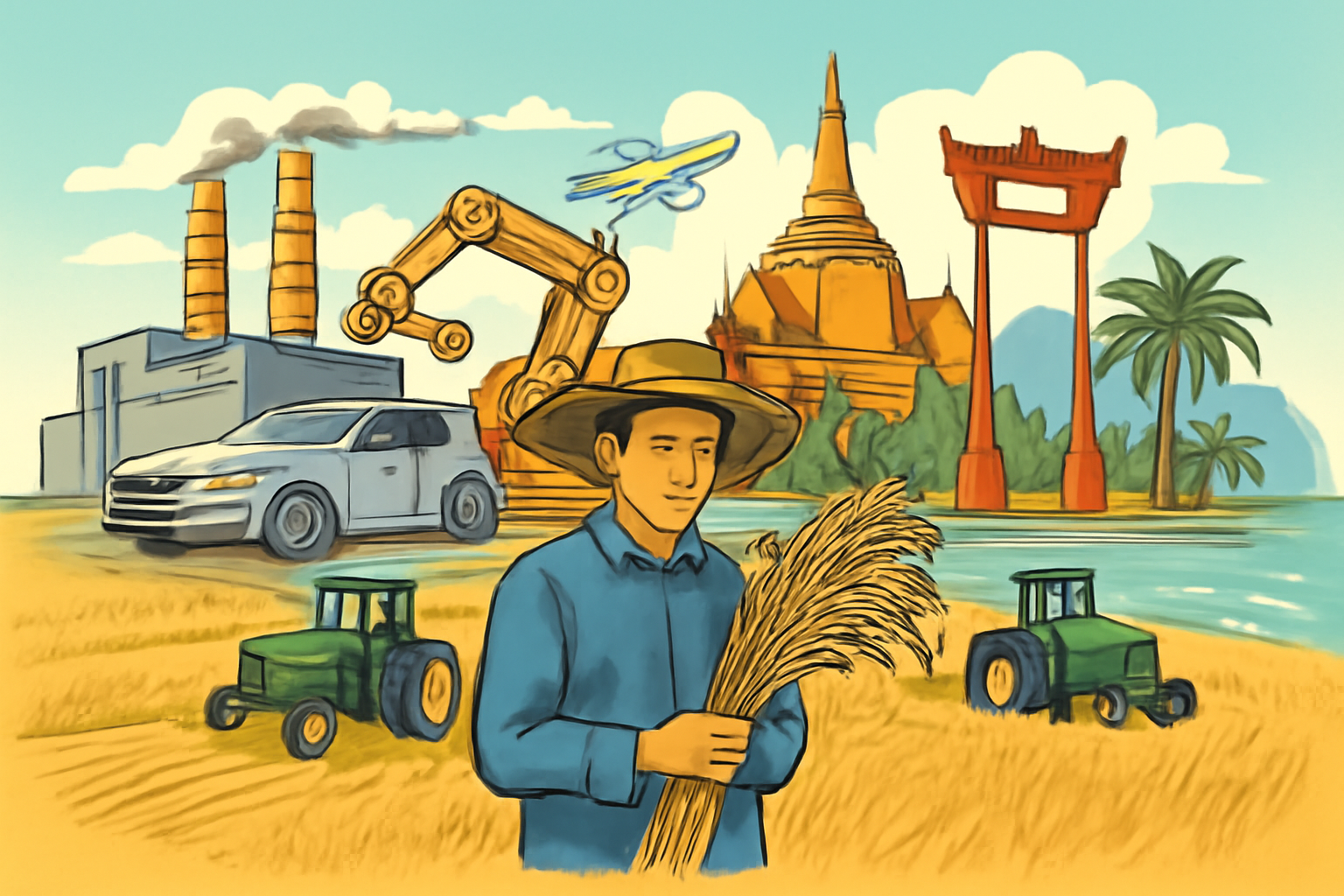
Thailand’s economy is built upon three foundational sectors: agriculture, industry, and tourism. Each of these sectors plays a vital role in the country’s growth, from providing essential resources to driving technological advancements and attracting millions of international visitors. The balance between these sectors is key to understanding the strength of Thailand’s economic performance.
Agriculture: Sustaining Thailand’s Economy
Thailand has long been an agricultural powerhouse, with its fertile soil and tropical climate allowing for the cultivation of a wide variety of crops. Rice, in particular, plays a central role in the country’s economy, as Thailand is one of the world’s leading rice exporters. Additionally, rubber, cassava, and tropical fruits such as pineapples and durian are significant contributors to the economy.
Despite the growing importance of industry and services, agriculture continues to provide employment for a large portion of the population, especially in rural areas. The Thai government has implemented a variety of programs aimed at modernizing agriculture, improving crop yields, and increasing sustainability. However, challenges such as fluctuating market prices, land use conflicts, and climate change impact the stability of the agricultural sector.
Industry: Thailand’s Industrial Expansion
Thailand’s industrial sector has grown exponentially in recent decades, positioning the country as a key manufacturing hub in Southeast Asia. The automotive, electronics, and petrochemical industries are the largest contributors to the nation’s industrial output. Thailand is known as the “Detroit of Asia” due to its leading position in automobile manufacturing.
The electronics industry also plays a crucial role in Thailand’s economy, with the country producing key components such as semiconductors and mobile devices for global markets. The “Thailand 4.0” initiative seeks to move the country toward more advanced industries, such as robotics, biotechnology, and digital technologies. By fostering innovation, Thailand aims to stay competitive in the global marketplace and diversify its industrial base.
The Impact of Tourism on Thailand’s Economy
Tourism is a major pillar of Thailand’s economy, contributing significantly to national income and employment. The country’s tropical beaches, rich cultural history, and diverse natural landscapes make it a favorite destination for international travelers. In 2019, nearly 40 million tourists visited Thailand, making it one of the most visited countries in the world.
Tourism generates substantial revenue and creates millions of jobs across various sectors, including hospitality, transportation, and retail. The government has invested heavily in promoting tourism, supporting both mass tourism and niche markets such as eco-tourism, medical tourism, and luxury travel. With the growth of digital platforms, Thailand has increasingly attracted international tourists from all over the globe.
Conclusion
Thailand’s economy thrives on the strength of its agricultural, industrial, and tourism sectors. Each sector supports the nation’s growth in its own way—agriculture sustains rural communities, industry drives technological progress, and tourism boosts national income and job creation. Together, they provide a diverse and resilient economic foundation for Thailand’s future.