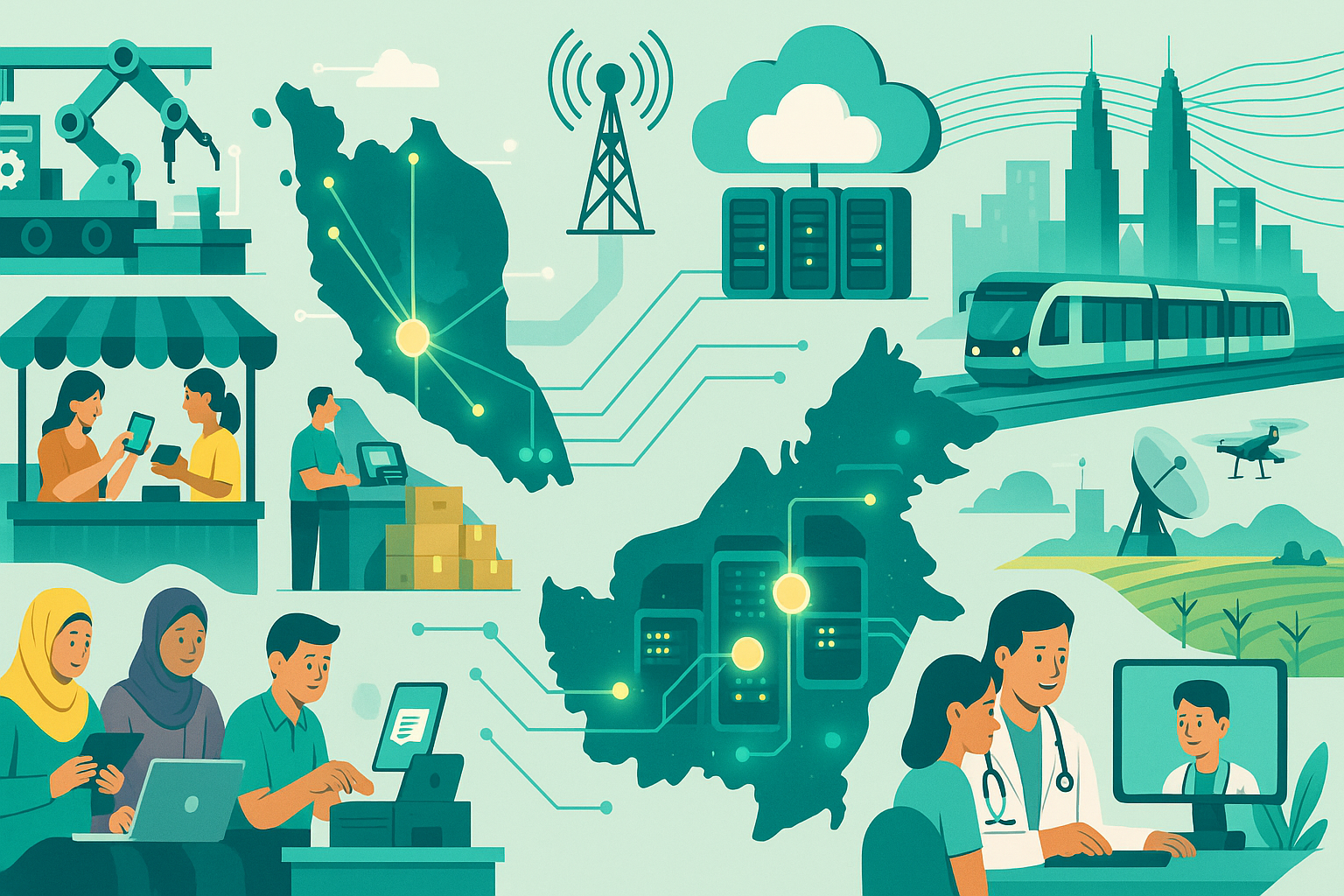
Malaysia’s digital economy extends beyond urban fintech and e-commerce into fields, fisheries, and food processing. Agriculture is being reshaped by connected sensors, satellite imagery, and analytics that help farmers manage water, fertilizer, and pests with precision. When these tools are paired with halal assurance systems, Malaysian producers can access premium markets that value traceability and quality.
On the farm, data replaces guesswork. Soil moisture probes, weather stations, and drone imagery inform irrigation schedules and pest control, lifting yields while conserving inputs. Simple mobile apps capture planting dates, inputs used, and harvest volumes, generating a digital logbook that supports certification and finance.
Cooperatives and aggregators are key enablers. Shared cold storage, processing facilities, and logistics platforms reduce per-unit costs for smallholders. Digital marketplaces match supply and demand, while embedded finance—credit, insurance, and equipment leasing—uses transaction histories to underwrite risk fairly.
Halal integrity requires verifiable traceability. Batch-level tracking from feed to fork, temperature monitoring across the cold chain, and tamper-evident packaging protect brand reputation. Digital audit trails, supported by time-stamped records and geolocation, make compliance more efficient for producers and more credible for buyers.
Export competitiveness depends on standards alignment. Producers who meet international quality, safety, and information security benchmarks face fewer frictions at borders and win the confidence of overseas distributors. Software that automates documentation—certificates, invoices, customs data—shortens cycle times and reduces errors.
Extension services can scale through digital channels. Agronomists share best practices via chat groups and video tutorials, while AI chat assistants provide quick answers on pests, weather, and market prices. Field visits still matter, but digital touchpoints make advice timely and continuous.
Risk management improves with data. Early-warning alerts for floods and droughts, diversified cropping plans, and parametric insurance tied to weather indices help stabilize incomes. Cooperatives that pool data can negotiate better rates for inputs and transport, translating information into bargaining power.
The broader effect is rural inclusion. As small producers join digital supply chains, they gain access to finance, new buyers, and higher-value inputs. With halal assurance layered on top, Malaysia can position its agro-food exports as safe, ethical, and reliably documented—a differentiated proposition in crowded markets.
By fusing agri-tech with end-to-end traceability, the country turns farm-level data into market-level advantage, connecting smallholders to the digital economy on fairer terms.