The temples of Thailand, known locally as wats, are revered as some of the most beautiful and spiritually significant structures in the world. Thai temple architecture combines divine symbolism with exceptional artistic craftsmanship, creating places of both worship and reflection. These temples are designed not only to honor the Buddha but also to represent the journey of the soul toward enlightenment, making them a vital part of the country’s cultural and spiritual landscape.
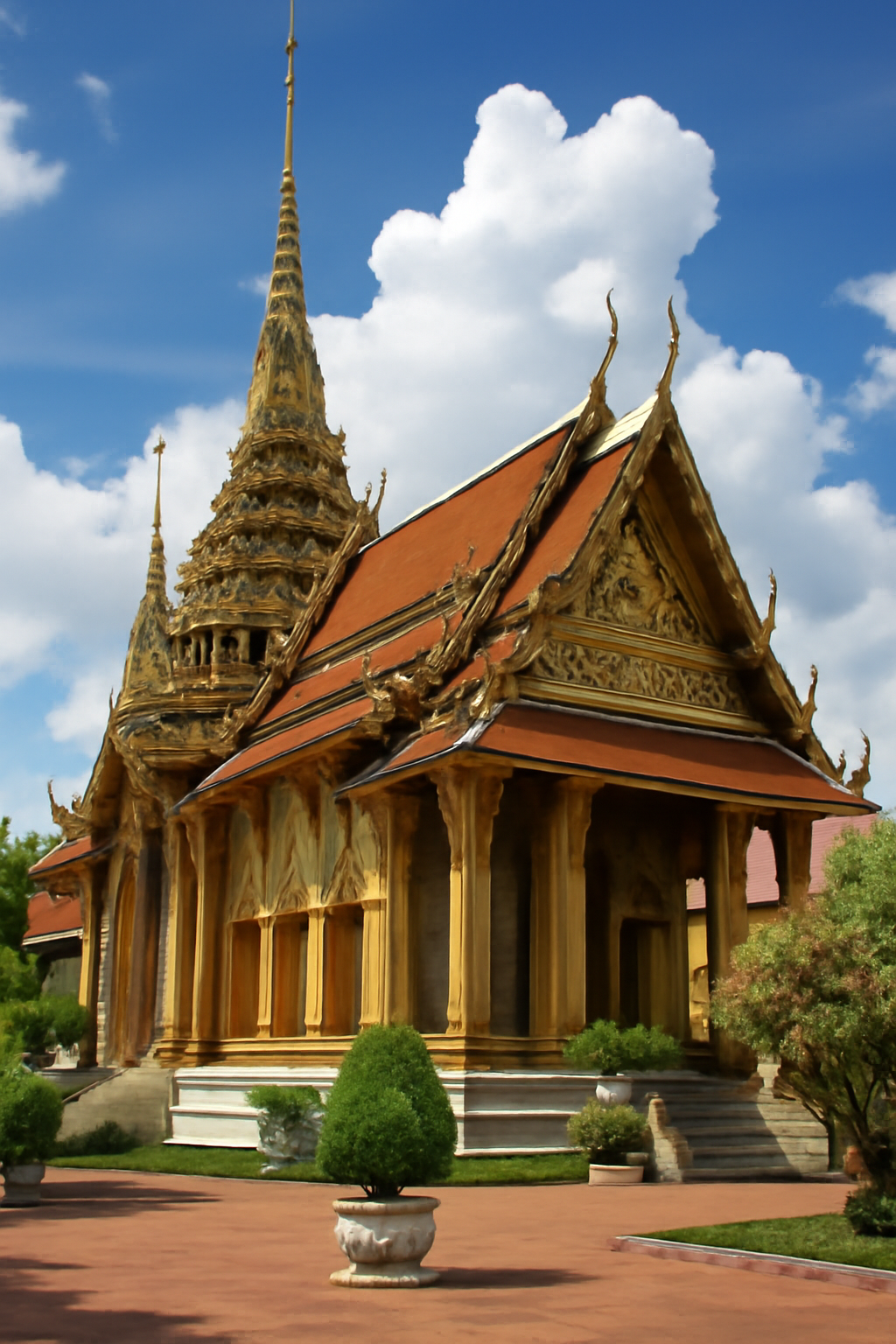
Central to every Thai temple is the prang, a towering spire that is often elaborately decorated with intricate carvings, golden mosaics, and colorful details. The prang symbolizes Mount Meru, the sacred center of the universe in Buddhist cosmology, and its height represents the spiritual journey upward towards enlightenment. The prang serves as both a visual and symbolic focal point, with worshippers gazing up toward it as a reminder of their spiritual aspirations.
The vihara, or main hall, is another important feature of Thai temples. Inside, the vihara is typically filled with statues of the Buddha in various poses, each representing a different aspect of his life, teachings, and path to enlightenment. These statues are often surrounded by elaborate murals that tell the story of the Buddha’s life, allowing worshippers to immerse themselves in the teachings and history of Buddhism. The murals provide a visual representation of the Buddha’s teachings on concepts such as compassion, the impermanence of life, and the pursuit of Nirvana.
The roofs of Thai temples are a signature aspect of their design. Often crafted with multiple layers, the curved roofs symbolize the petals of the lotus flower, a symbol of spiritual purity in Buddhism. These roofs are not only aesthetically pleasing but also serve a practical purpose, helping to direct rainwater away from the temple’s foundation. The roofs are often decorated with intricate carvings, gilded details, and statues of mythical creatures, such as Naga serpents, which are believed to offer protection to the temple.
Gold is a common element in Thai temple architecture, symbolizing the purity of the Buddha’s teachings and the divine light of enlightenment. Gold-leafed Buddha statues, for example, are a common sight in many temples, and worshippers often make offerings by applying small pieces of gold leaf to these statues as a sign of reverence and devotion.
The grounds surrounding the temple are designed to promote a sense of peace and tranquility. Beautifully landscaped gardens, lotus ponds, and trees create a serene environment that fosters reflection, meditation, and spiritual growth. The temple complex itself is often designed to embody the Buddhist ideal of harmony between humanity, nature, and the divine.
Thai temples are more than just places of worship—they are profound expressions of cultural and spiritual identity. Through their architectural grandeur and artistic beauty, these temples continue to inspire awe and reverence, offering a space for worshippers to connect with the divine while reflecting on their spiritual journey.