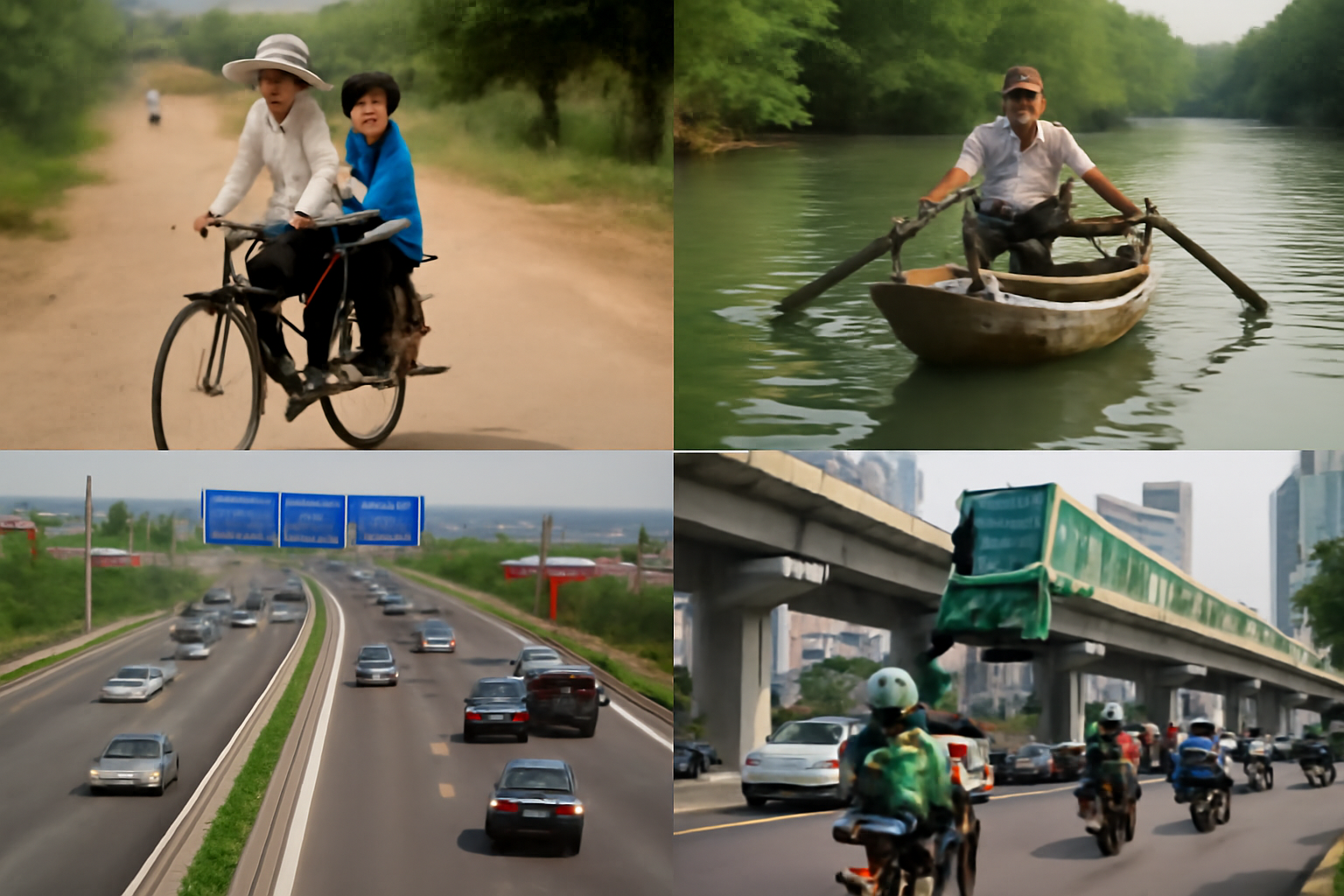
Vietnam’s transportation landscape has dramatically transformed in recent decades, evolving from a rudimentary network reliant on traditional vehicles to one that now boasts modern highways, railways, and urban mass transit systems. These changes have played a significant role in supporting the country’s economic growth, facilitating domestic and international trade, and improving the quality of life for its citizens.
In the past, transportation in Vietnam was limited to basic forms of mobility. In rural areas, boats and bicycles were the main methods of transport, while urban centers had only a limited number of roads. The use of bicycles, rickshaws, and public transport was widespread, but these systems were not well-equipped to support the growing urban populations or economic needs of the country.
The turning point came in the late 20th century when Vietnam embarked on a series of economic reforms under the Doi Moi policy. The introduction of these reforms in the 1980s helped stimulate the growth of the private sector and led to significant investments in infrastructure. The result was an expanded road network, including the construction of national highways that connected the north and south of the country.
As the economy boomed in the 1990s and 2000s, private vehicle ownership, particularly motorbikes, skyrocketed. The motorbike became the dominant mode of transport, especially in cities where traffic congestion was already becoming a significant problem. In response, the Vietnamese government began to invest in larger public transportation systems and worked to modernize the country’s urban mobility options.
One of the most transformative changes to urban mobility has been the introduction of metro systems. Hanoi launched its first metro line in 2021, and Ho Chi Minh City is planning a similar system to reduce the heavy dependence on motorbikes and reduce air pollution. These metro systems represent a major shift in urban planning and mobility, offering residents an efficient and sustainable mode of transportation.
In addition to metro systems, ride-hailing services like Grab have revolutionized the way people travel within cities. These services have provided a modern, on-demand transportation option for millions of people, offering more convenience and flexibility than traditional taxis or public buses.
Vietnam is also embracing new technologies in transportation, including electric vehicles and smart city initiatives that aim to reduce traffic congestion and environmental impact. As the country moves forward, the continued development of transportation infrastructure will be critical to meeting the needs of its expanding urban population and driving further economic growth.