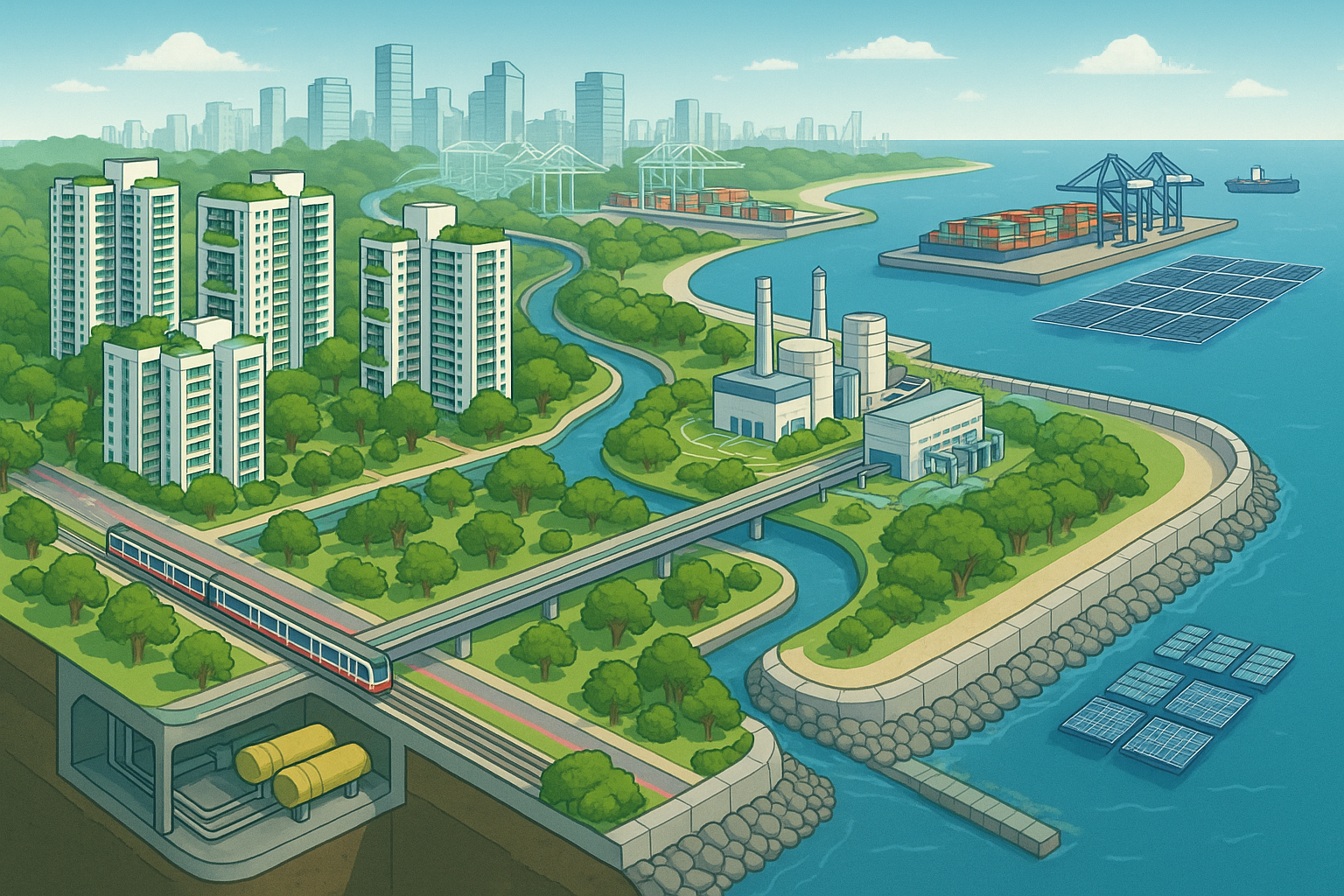
Energy planning in Singapore begins with a blunt fact: space is scarce. Rooftops and reservoirs can host solar, but there is no hinterland for vast wind farms or utility-scale biomass. The grid therefore leans on efficient thermal generation while pushing hard on demand-side measures and selective renewables. The objective is a low-carbon, reliable system that fits on an island.
Solar is pursued wherever surfaces exist—roofs, façades, carparks, and floating arrays on water bodies. Yet intermittency and limited area cap its share, prompting investment in storage pilots, advanced forecasting, and flexible generation that can ramp quickly. Data centers, a growing load, are steered toward best-in-class efficiency and heat management; new builds are evaluated for power density and grid impact. Building codes raise envelope performance, mandating shading, insulation, and ventilation features that cut cooling demand in the tropical climate.
Regional interconnection is the strategic lever. By importing low-carbon power from neighbors through subsea links, Singapore can access scale that the island cannot host. Such links require political trust, market rules, and technical synchronization, but they offer a path to decarbonize without sacrificing reliability. In parallel, electrification of transport and industry is sequenced with grid upgrades, so chargers, substations, and feeders arrive before bottlenecks emerge.
Efficiency is the quiet workhorse. Appliance standards, real-time metering, dynamic tariffs, and demand response shave peaks and reduce the need for new generation capacity. District cooling in dense precincts exploits economies of scale; thermal storage shifts load to off-peak hours. For industry, electrified processes and heat pumps replace fuel-fired systems where feasible, cutting emissions while improving air quality.
Climate resilience overlays everything. Substations are flood-protected; cables are routed with redundancy; and heatwaves inform transformer ratings. In a land-limited city, each megawatt saved is as valuable as a megawatt built. The strategy is pragmatic: decarbonize where the island can, connect to where it cannot, and relentlessly squeeze waste from the system.