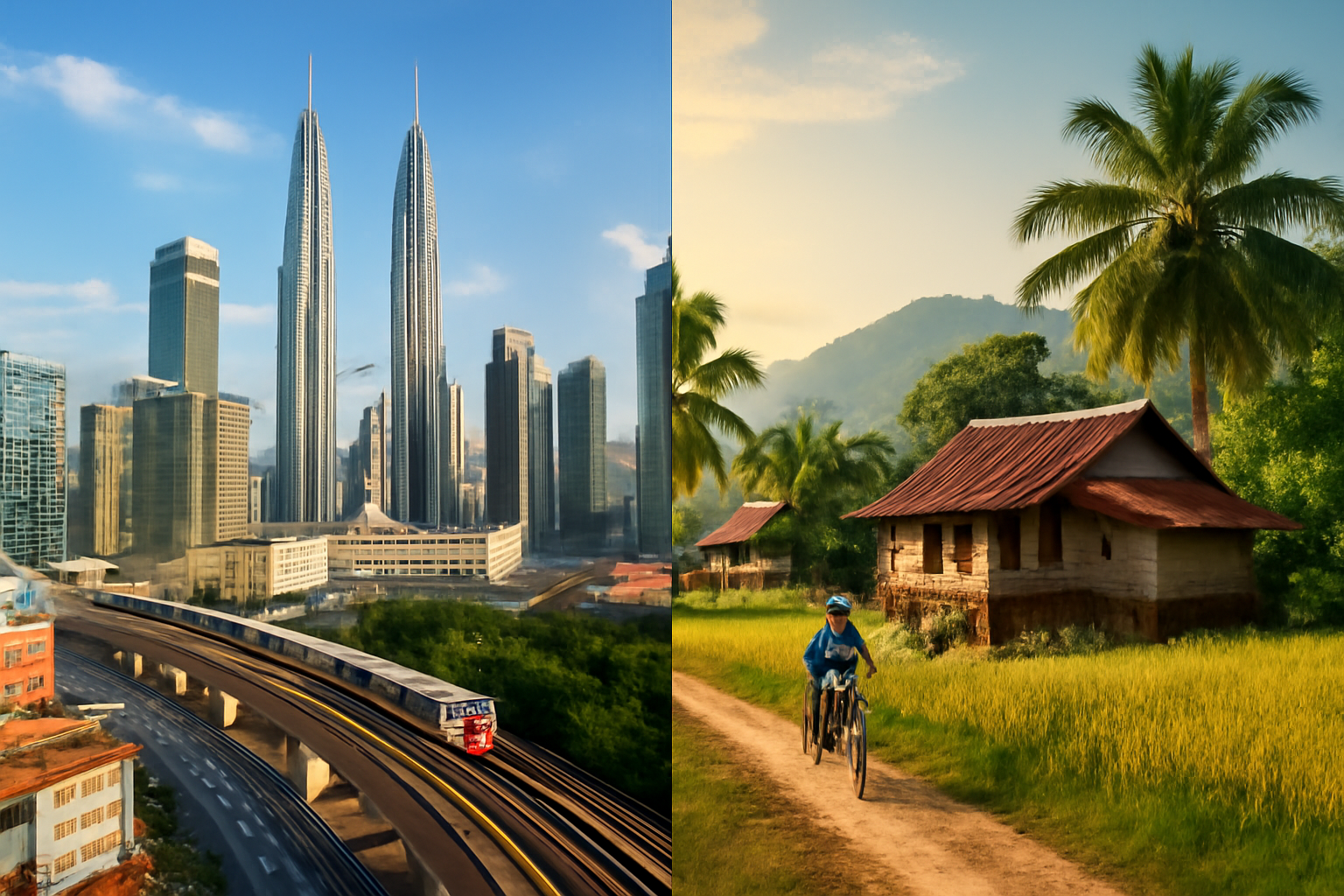
Malaysia offers a fascinating contrast between urban and rural living. Whether you’re drawn to the fast-paced city lifestyle or the peaceful rural way of life, each setting offers distinct advantages, challenges, and opportunities. Understanding these key differences can help individuals make informed decisions about where to live and what lifestyle suits them best.
Urban Living: A Hub of Activity and Opportunity
Cities like Kuala Lumpur, Penang, and Johor Bahru are Malaysia’s economic and cultural powerhouses, offering residents a fast-paced, modern lifestyle. The urban environment is ideal for those seeking career advancement, as cities are home to major industries such as finance, technology, healthcare, and retail. With state-of-the-art public transportation systems, world-class medical facilities, and numerous educational institutions, city living provides residents with easy access to essential services and modern amenities.
However, the high cost of living in these cities can be a significant challenge. Property prices have risen sharply in major metropolitan areas, making it difficult for many to afford homeownership. Rental prices are also high, and daily expenses such as transportation and food can add up quickly. Cities are often crowded and noisy, and pollution is a growing concern, particularly in large urban centers like Kuala Lumpur.
Rural Living: Tranquil and Close to Nature, but Isolated
Rural Malaysia, on the other hand, offers a completely different lifestyle, characterized by peace, simplicity, and a deep connection to nature. In areas such as Kelantan, Sarawak, and Perak, rural life revolves around agriculture, fishing, and local trade. Many rural communities are tight-knit, with strong family and community ties, offering a sense of security and belonging that is often lacking in urban areas.
However, rural areas face challenges related to access to services. While the cost of living is generally lower, rural residents often face limited access to healthcare, education, and modern conveniences. Public services such as transportation, electricity, and internet access may not be as reliable as in cities, making life more difficult for those in remote areas. Employment opportunities are also more limited, particularly for those seeking work in fields outside of agriculture or small businesses.
Urban and Rural Struggles
In urban settings, the high cost of living, coupled with traffic congestion, pollution, and social disconnection, can make life difficult. Long working hours and a lack of personal time can lead to burnout, while rising housing costs leave many individuals unable to afford their own homes. Despite the abundance of services, the crowded urban environment can make people feel isolated or anonymous.
In rural areas, the primary struggles are related to infrastructure and employment. While the lower cost of living is attractive, the limited access to services such as education and healthcare can hinder the quality of life. Rural areas may also lack the job opportunities available in urban centers, making it difficult for young people to find fulfilling careers without relocating to a larger city.
Potential in Both City and Rural Living
Both urban and rural Malaysia offer numerous opportunities for growth and success. In cities, the job market is diverse, with ample opportunities in technology, finance, healthcare, and retail. For those with entrepreneurial ambitions, cities are also a breeding ground for startups, with access to capital, networks, and resources.
Rural areas, however, present opportunities in agriculture, tourism, and traditional crafts. As global demand for organic products and eco-tourism continues to rise, rural communities are finding new avenues for growth. The Malaysian government has been actively promoting rural development, with programs aimed at improving infrastructure, creating jobs, and enhancing the standard of living in rural areas.
Whether in the city or the countryside, each environment offers distinct benefits and challenges. By understanding these differences, individuals can make the choice that aligns best with their lifestyle goals and career aspirations.