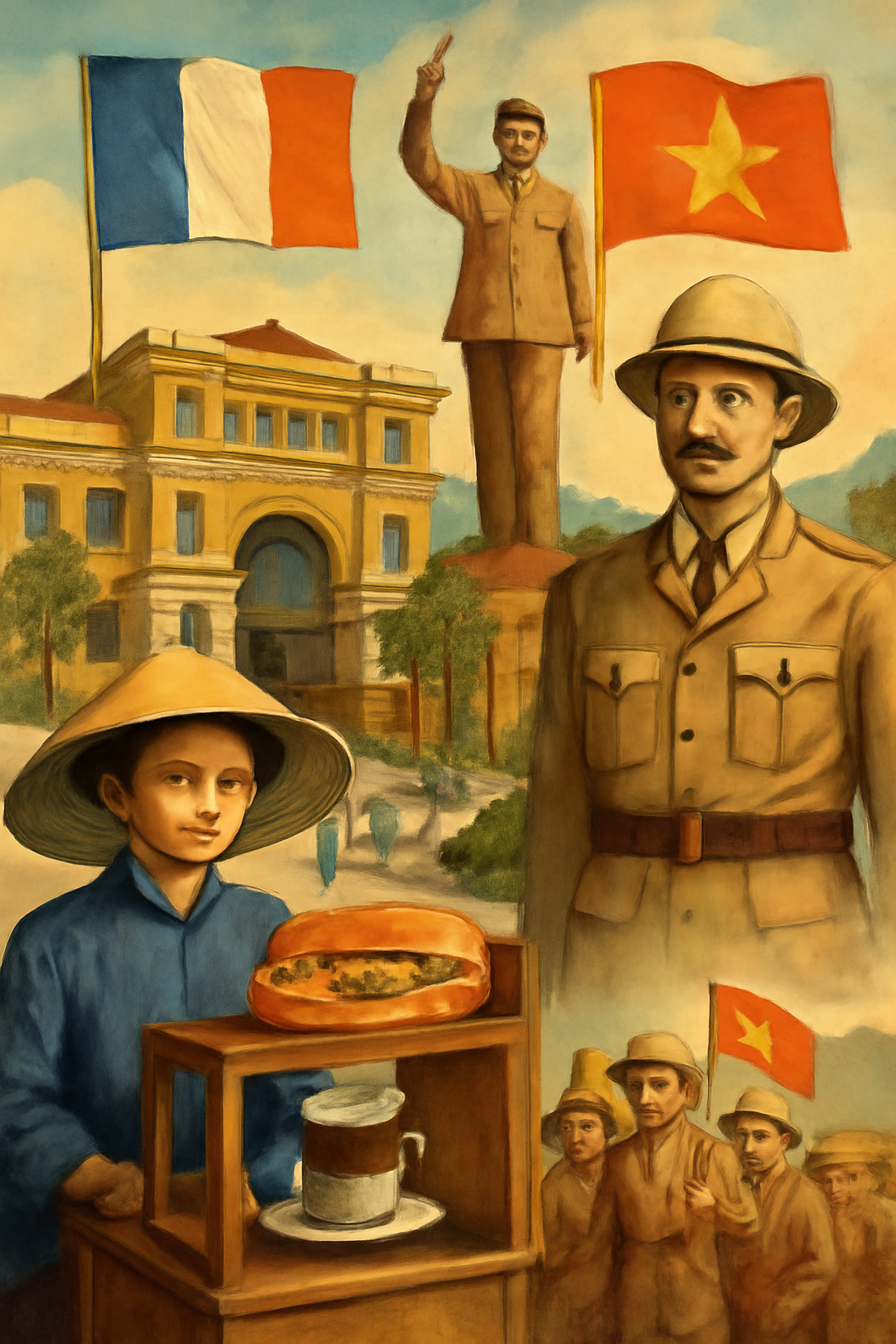
The French colonization of Vietnam, lasting from the mid-19th century until the mid-20th century, had a transformative impact on the country. France’s colonial rule reshaped Vietnam’s political institutions, social systems, and cultural identity in ways that continue to reverberate today. From the exploitation of natural resources to the introduction of new cultural elements, the French left an indelible mark on Vietnam.
Politically, the French colonial government implemented a system of centralized control, which diminished the authority of the Vietnamese monarchy and replaced traditional governance structures with a French-led administration. The French used Vietnam’s resources to fuel their own industrial growth, particularly focusing on the extraction of rubber, rice, and minerals. This exploitation was often carried out at the expense of the local population, with many Vietnamese subjected to forced labor in plantations and mines.
The cultural impact of French colonization is still evident in modern Vietnamese society. One of the most visible legacies is the architecture, which blends French colonial design with traditional Vietnamese styles. In cities like Hanoi and Ho Chi Minh City, French-style buildings, such as the Hanoi Opera House and the Saigon Notre-Dame Basilica, are iconic landmarks. The French also introduced Western-style urban planning, creating wide boulevards and green spaces that reshaped the physical landscape of these cities.
The French language became a key part of the educational system during the colonial period. It was adopted as the language of governance and intellectual life, and French became the language of the Vietnamese elite. Today, while French is no longer widely spoken, its influence remains in the form of numerous French loanwords in the Vietnamese language, especially in the realms of law, politics, and cuisine.
In the culinary sphere, French influence is particularly noticeable. The introduction of French bread, pastries, and cooking techniques led to the creation of dishes that combine both French and Vietnamese ingredients. The “banh mi,” a sandwich made with a French baguette, is perhaps the most famous example of this fusion. French coffee culture also took root, resulting in the beloved Vietnamese iced coffee, “cà phê sữa đá,” made with condensed milk.
Despite the cultural exchange, the French presence in Vietnam was not without conflict. The harsh exploitation of the Vietnamese people led to the rise of nationalist movements, which eventually led to the overthrow of French rule. The First Indochina War, which culminated in the French defeat at the Battle of Dien Bien Phu in 1954, ended French colonial dominance. This marked the beginning of Vietnam’s path to independence.
While French colonialism is remembered for its exploitation and oppression, the cultural legacy it left behind is undeniable. From language and architecture to cuisine and coffee culture, the French influence continues to shape the identity of modern Vietnam.