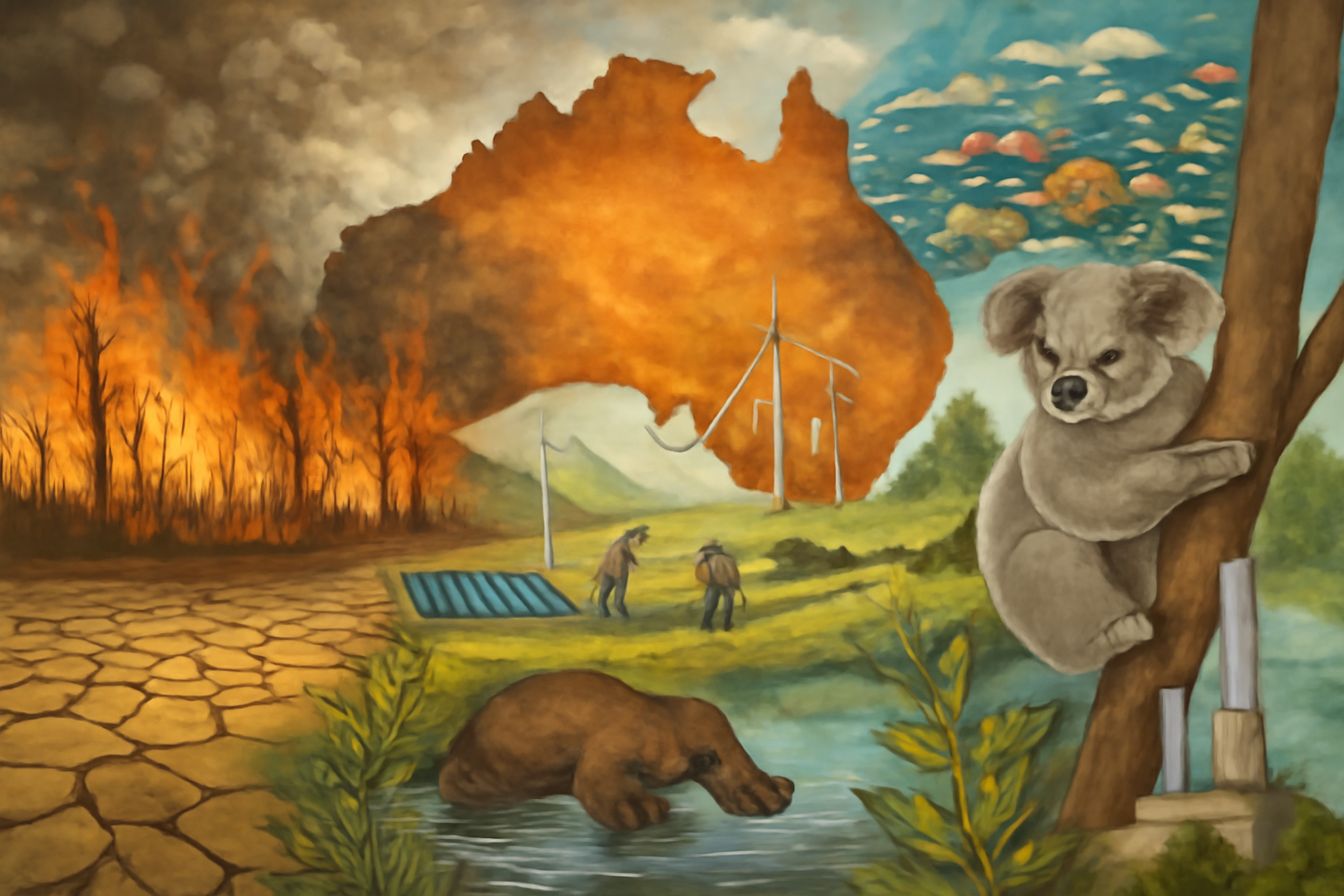
Australia is increasingly vulnerable to the effects of climate change, with rising temperatures, extreme weather events, and ecosystem disruptions becoming more pronounced. These environmental changes are posing significant challenges to Australia’s biodiversity, agriculture, and overall way of life. Climate change has exacerbated issues such as wildfires, droughts, and the degradation of natural habitats, which are undermining both the environment and the economy.
One of the most striking consequences of climate change in Australia is the increasing frequency and severity of bushfires. The 2019–2020 bushfire season, known as “Black Summer,” was particularly devastating, burning large areas of forest, destroying homes, and killing millions of animals. The fires were fueled by high temperatures and dry conditions, which are becoming more common as a result of climate change. The frequency of such intense fires is expected to rise, putting both communities and wildlife at greater risk.
Droughts are another major challenge. Australia’s already dry climate is becoming even more arid due to shifting weather patterns. Many regions, particularly those dependent on agriculture, are experiencing water shortages that threaten crop production and livestock farming. Water scarcity is also a growing issue in urban areas, with cities like Sydney facing increasing pressure on water resources. In agriculture, the effects of drought are compounded by rising temperatures, which negatively impact soil health and crop yields.
The Great Barrier Reef, one of the most iconic ecosystems in the world, is also suffering from the effects of climate change. Coral bleaching, driven by higher sea temperatures, is causing widespread damage to the reef, which is home to a diverse array of marine species. The destruction of coral reefs has far-reaching consequences, not only for marine biodiversity but also for the industries that depend on the reef, including tourism and fishing.
Australia’s response to these environmental challenges has focused on reducing greenhouse gas emissions, conserving natural resources, and restoring damaged ecosystems. The country has made significant commitments to international climate agreements, such as the Paris Agreement, to reduce emissions and limit global warming. Transitioning to renewable energy sources like wind and solar power is a crucial step in mitigating the impacts of climate change.
Conservation efforts within Australia have prioritized protecting endangered species and preserving ecosystems that are under threat from climate change. National parks and protected areas have been established to safeguard critical habitats, while restoration projects are underway to rehabilitate damaged ecosystems. These conservation initiatives are essential for maintaining biodiversity and ecosystem services, which are vital to both the environment and the economy.
Additionally, Australia is increasingly recognizing the value of Indigenous knowledge in land management. Traditional fire management practices, such as controlled burns, have been used by Indigenous Australians for thousands of years to maintain healthy landscapes and prevent catastrophic fires. These practices are now being integrated into modern conservation strategies to reduce the impact of wildfires and promote ecosystem health.
By adopting both traditional and modern conservation approaches, Australia can work toward mitigating the effects of climate change and preserving its natural resources for future generations.