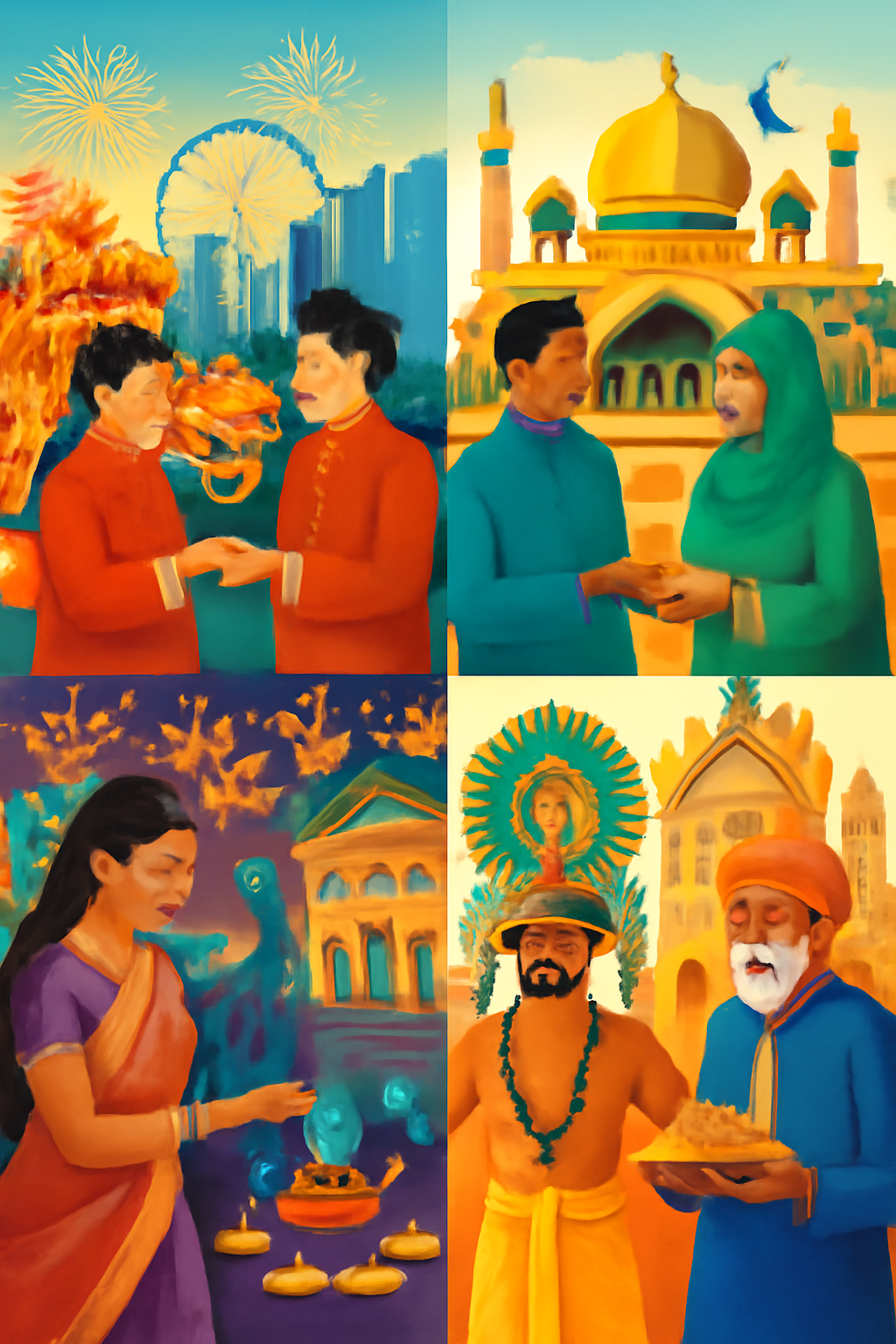
In Singapore, festivals are more than just occasions for celebration – they are a reflection of the country’s unique multicultural identity. With various ethnic groups coexisting harmoniously, Singapore’s festivals offer a beautiful tapestry of rituals, food, music, and dance that celebrate the deep-rooted traditions of its people. These festivals are not just celebrations; they embody the values and spirit of the different communities that make up Singapore’s population.
Chinese New Year is one of the most widely anticipated festivals in Singapore. The entire country comes alive with vibrant red decorations and lights, symbolizing good fortune and prosperity. Families clean their homes, buy new clothes, and prepare special dishes like yu sheng (raw fish salad) to usher in a prosperous year. The Chingay Parade, a grand showcase of cultural performances, floats, and traditional dances, is one of the highlights, drawing crowds from all over the world to witness the beauty of Singapore’s multiculturalism.
For the Malay Muslim community, Hari Raya Puasa marks the culmination of Ramadan, the holy month of fasting. The festival is characterized by solat (prayers), feasts, and visiting family and friends. In areas like Geylang Serai, the streets are filled with bustling markets selling clothes, food, and festive decorations. The popular food stalls are filled with traditional Malay dishes such as rendang, nasi briyani, and satay, offering an authentic taste of the culture.
The Deepavali festival is an important occasion for Hindus, who celebrate the victory of light over darkness. It is often referred to as the Festival of Lights, with homes, temples, and public spaces illuminated by thousands of diyas. In Little India, the atmosphere is electric with colorful lights, parades, and performances, bringing the streets to life. The festival is a time for families to gather, pray, and enjoy delicious traditional sweets like barfi, laddu, and gulab jamun.
For the Sikh community, Vaisakhi is a significant festival. It marks the harvest season as well as the founding of the Khalsa by Guru Gobind Singh Ji in 1699. Sikhs in Singapore celebrate with prayers at the Gurdwaras, followed by langar, a community meal. Vaisakhi is not only a religious observance but a time for Sikhs to express gratitude and share with others. The festival emphasizes the values of seva (selfless service), sangat (community), and equality.
The festival of Thaipusam is another important event celebrated by the Hindu community in Singapore, dedicated to Lord Murugan. During this intense festival, devotees often pierce their bodies with hooks or carry large kavadis as acts of devotion. The procession from the Sri Srinivasa Perumal Temple to the Sri Thendayuthapani Temple is a spectacle that draws both locals and visitors to witness the devotion and physical endurance of the participants.
These celebrations serve as a reminder of the deep respect for tradition and culture that Singaporeans have, and they play a critical role in fostering unity in a society rich in diversity. Through these festivals, individuals from different ethnic and religious backgrounds come together to celebrate their unique heritages while also embracing the shared values that make Singapore a beacon of multiculturalism.