As Vietnam continues to open up to the global economy, it is experiencing profound social changes. Globalization, which connects countries through trade, technology, and culture, is having a transformative impact on daily life in Vietnam, affecting everything from urban living to social relationships. While these changes bring economic growth and cultural exchange, they also create tensions between tradition and modernity.
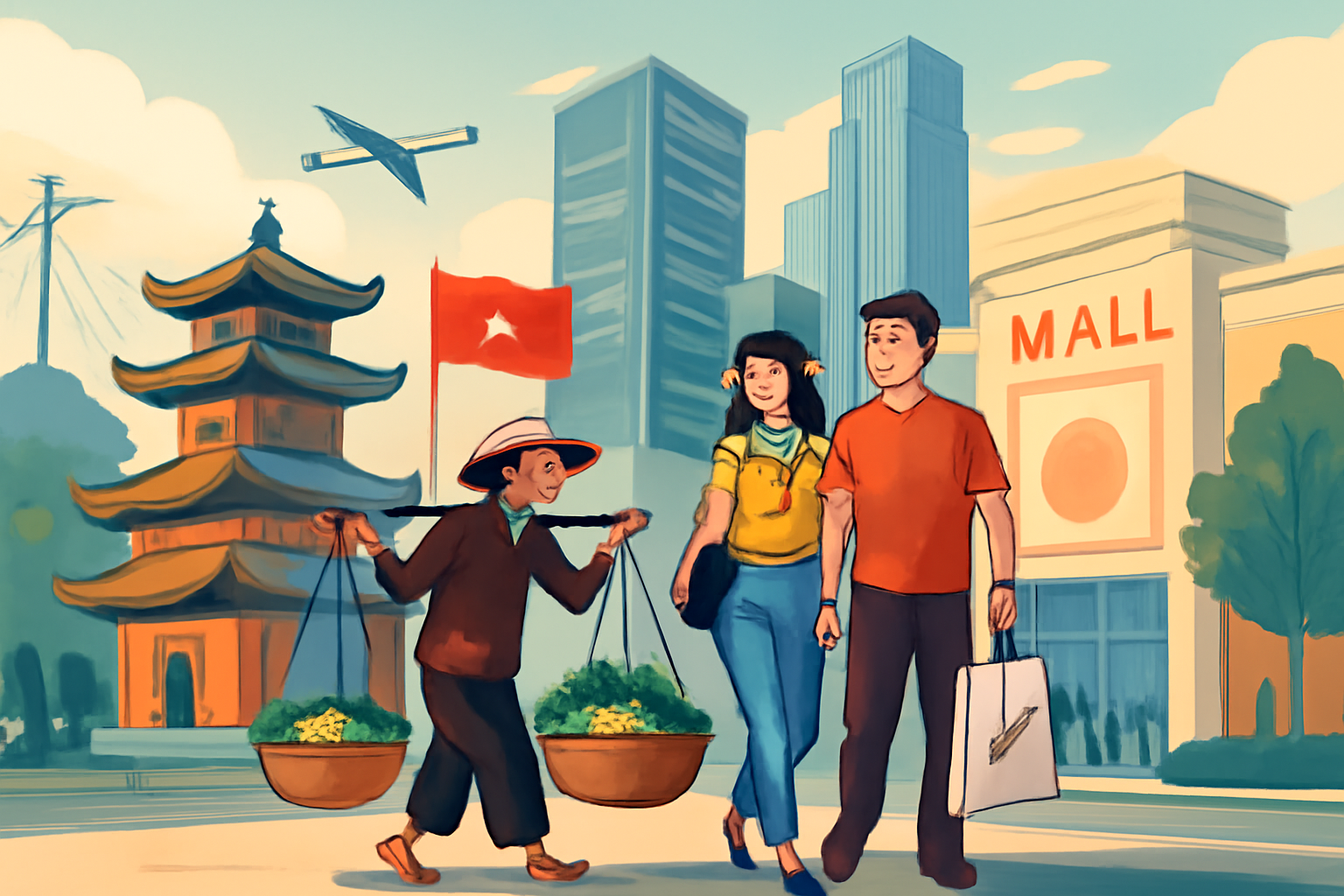
One of the most visible effects of globalization is urbanization. Major cities like Ho Chi Minh City and Hanoi are expanding rapidly as multinational corporations set up operations and foreign investments flood in. This urban growth has created new economic opportunities but has also led to a shift in the way people live. Young people, in particular, are flocking to cities for better job prospects and a more modern lifestyle. This shift has led to the rise of a more cosmopolitan and globalized culture in urban centers, where traditional values are increasingly challenged by Western ideals.
Vietnam’s consumer culture is another area significantly influenced by globalization. International brands are now ubiquitous in the country, and urban consumers, particularly the younger generation, have embraced these products as part of a modern lifestyle. The increasing availability of Western goods, such as fast food chains, international fashion, and electronic gadgets, has changed how Vietnamese people spend their money and engage with the global market.
Social norms and values in Vietnam are also undergoing a transformation. The influence of Western ideas, particularly around individualism and career ambition, has led to a shift in priorities for many young people. Traditional Vietnamese culture emphasized family loyalty and collective well-being, but globalization has introduced a new focus on personal achievement and self-expression. As a result, family dynamics are changing, with younger generations increasingly prioritizing individual goals over traditional family expectations.
The education sector in Vietnam has also been deeply affected by globalization. In order to succeed in a globalized world, there has been an increasing emphasis on learning English and adopting international curricula. More Vietnamese students are attending universities abroad or participating in international exchange programs, gaining exposure to different cultures and perspectives. This international exposure provides young people with the tools they need to navigate the global economy, but it also brings challenges in terms of maintaining national identity and cultural heritage.
Despite these opportunities, there are challenges associated with globalization in Vietnam. The growing urban-rural divide, for example, has created significant disparities in access to resources and opportunities. Rural areas often lag behind in terms of economic development and access to modern technologies. Additionally, the spread of global culture has sparked concerns about the erosion of Vietnam’s unique traditions and values, especially among the younger population. Balancing these global influences with the preservation of local culture is one of the nation’s key challenges moving forward.