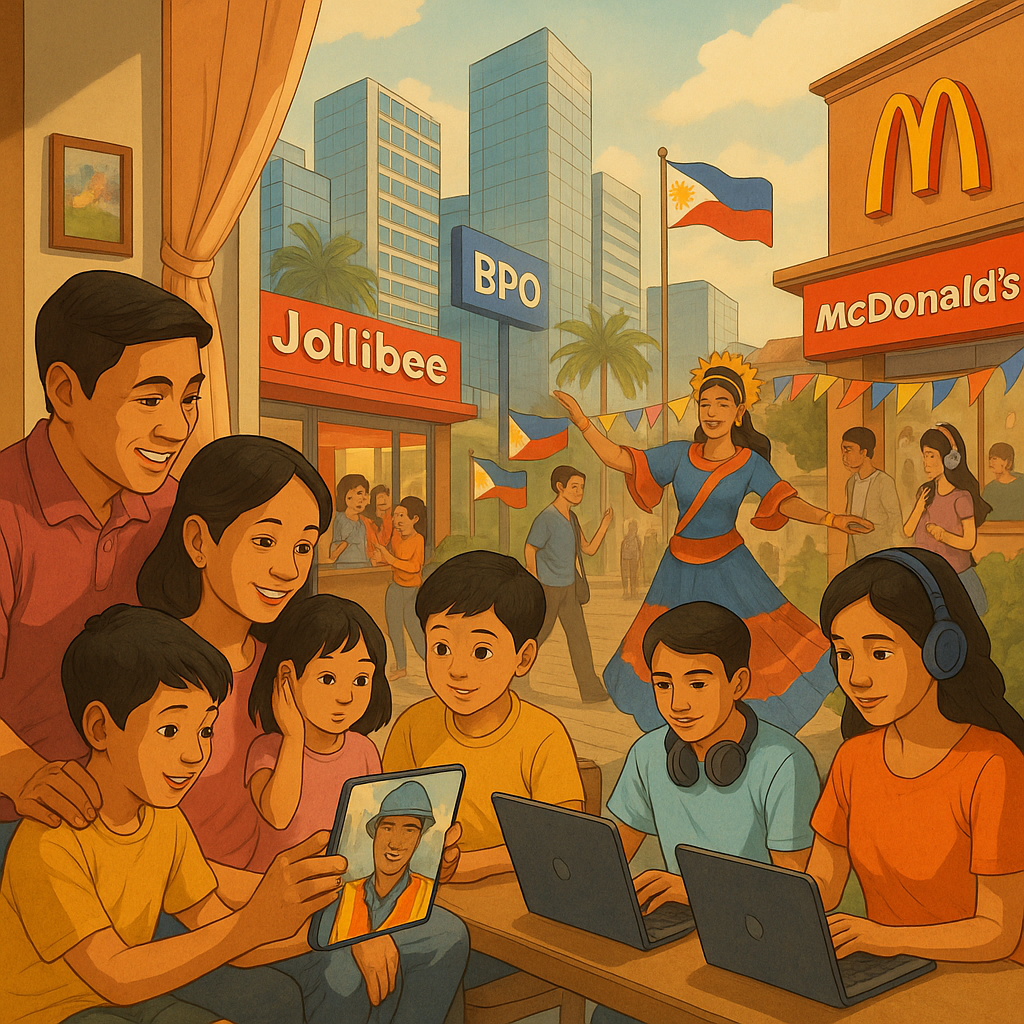
The impact of globalization in the Philippines is clearly visible within families and household dynamics. As economic opportunities become increasingly international, decisions about who works, who stays home, and how children are raised are being reshaped. The traditional image of a father working locally and a mother staying at home is not as dominant as before. Today, mothers often lead the way in overseas employment, working as caregivers, nurses, or domestic workers abroad, while fathers, grandparents, or other relatives manage the household.
These shifts create new patterns of responsibility and authority. Children may grow up with a mother who is physically absent but financially central, or a father who takes on tasks previously associated with maternal roles. Communication technologies become essential tools for maintaining emotional bonds, with parents attending school events through video calls or giving advice via chat. The family budget, meanwhile, increasingly depends on foreign currency, making exchange rates and global economic fluctuations part of everyday worries.
Gender roles are not only changing inside the home but also in the workplace. Globalized industries such as BPO, hospitality, and healthcare often employ large numbers of women. This offers greater financial independence and career options but can also create double burdens, as women juggle professional responsibilities and domestic expectations. Exposure to global discourses on women’s rights and gender equality influences how Filipinos think about marriage, parenting, and professional ambition, especially among younger generations.
Health and lifestyle are also affected by global trends. The spread of fast food, sugary drinks, and processed snacks has contributed to rising concerns about obesity, diabetes, and heart disease. At the same time, global fitness trends, wellness apps, and health information are widely accessible, encouraging more people to exercise, track their diet, or seek mental health support. Everyday choices about what to eat, how to relax, and how to cope with stress are increasingly guided by global marketing and online advice.
Education within families reflects a strong orientation toward global competitiveness. Parents invest heavily in English education, digital devices, and extracurricular activities they believe will help their children secure jobs in a global labor market. Many encourage their children to consider careers abroad or in globally linked sectors. Homework may involve online research, international collaboration projects, or exposure to global issues such as climate change and migration. As a result, children grow up with a sense that their opportunities and challenges are not confined to the Philippines.
Faith and religious practices offer another lens on social change. The Philippines remains a deeply religious country, yet religious life now interacts with global communications and ideas. Churches stream services online, religious content circulates on social media, and international religious movements influence local discussions. Families incorporate these global religious influences into daily routines, from online prayers to faith-based content on their newsfeeds. Through all these developments, Filipino families actively reinterpret their roles and values in a world where global and local influences constantly intersect.