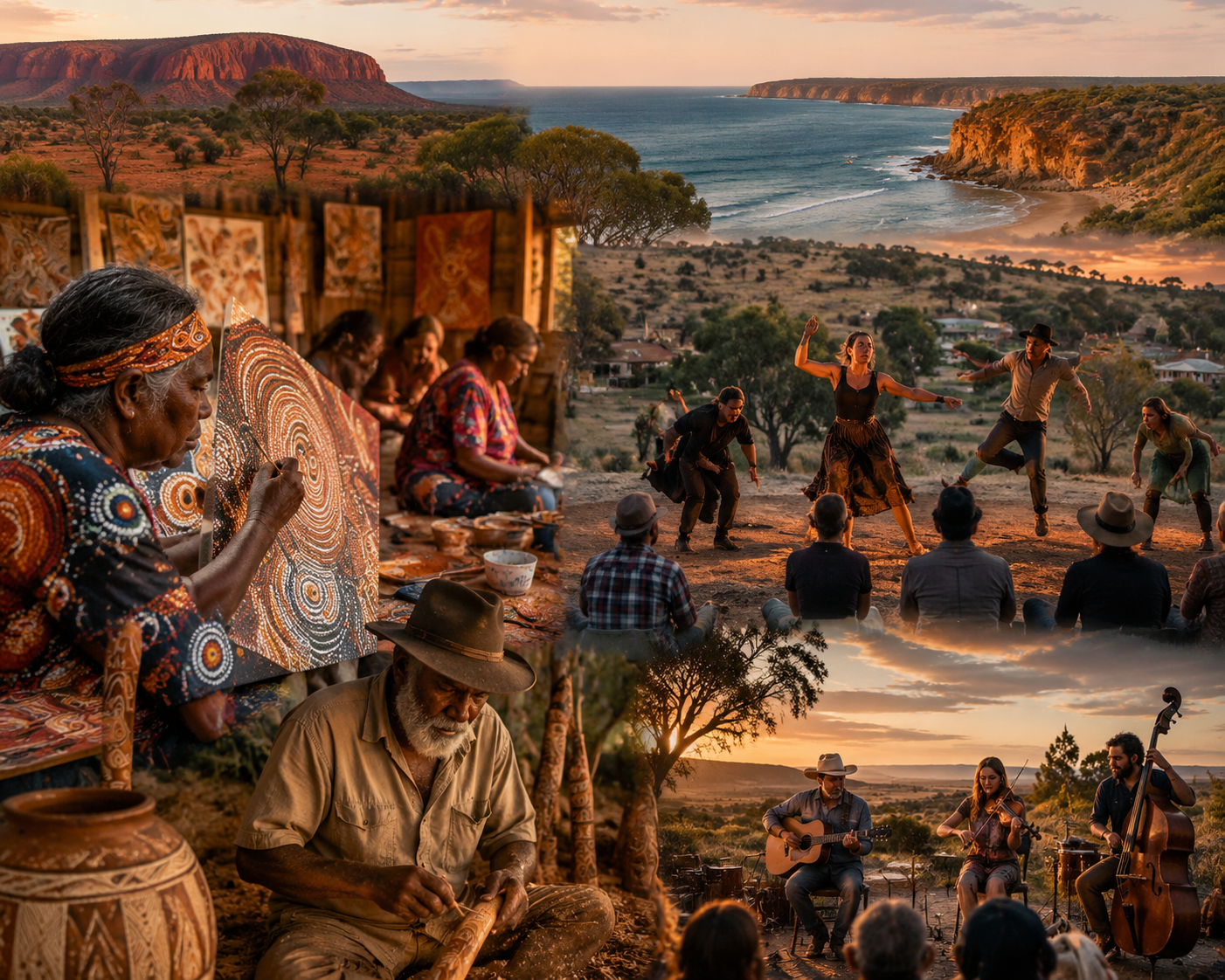
Contemporary Indigenous Australian art represents one of the most dynamic and globally significant developments in modern art history. While grounded in ancient cultural traditions, it has evolved into a diverse and experimental field that engages with modern materials, global audiences, and contemporary issues.
Traditional Indigenous art was deeply connected to ceremony, land, and ancestral storytelling. Designs found in sand paintings, rock art, and body decoration were not merely decorative; they encoded knowledge systems, law, and spiritual maps of the landscape. Over time, these practices transitioned into new formats as Indigenous communities began using canvas, acrylic paint, and urban media.
The Papunya Tula movement in the early 1970s marked a turning point. Artists from the Western Desert began transferring sacred sand designs into permanent paintings. This shift allowed Indigenous visual culture to enter galleries while maintaining cultural continuity. It also created a platform for Indigenous artists to gain economic independence and international visibility.
Today, contemporary Indigenous artists explore a wide range of themes beyond traditional Dreaming narratives. Many works address colonization, displacement, climate change, and identity politics. Artists like Brook Andrew and Julie Gough combine archival research with visual storytelling, challenging historical narratives and institutional memory.
Digital technology has also become an important tool. Some artists use video installations and interactive media to reinterpret ancestral stories in modern formats. This blending of old and new creates a living artistic tradition rather than a static heritage.
Despite its success, Indigenous art also faces challenges, including cultural appropriation and unethical commercialization. Community-led art centers and Indigenous curatorial practices have become essential in protecting authenticity and ensuring that cultural knowledge remains respected and properly attributed.