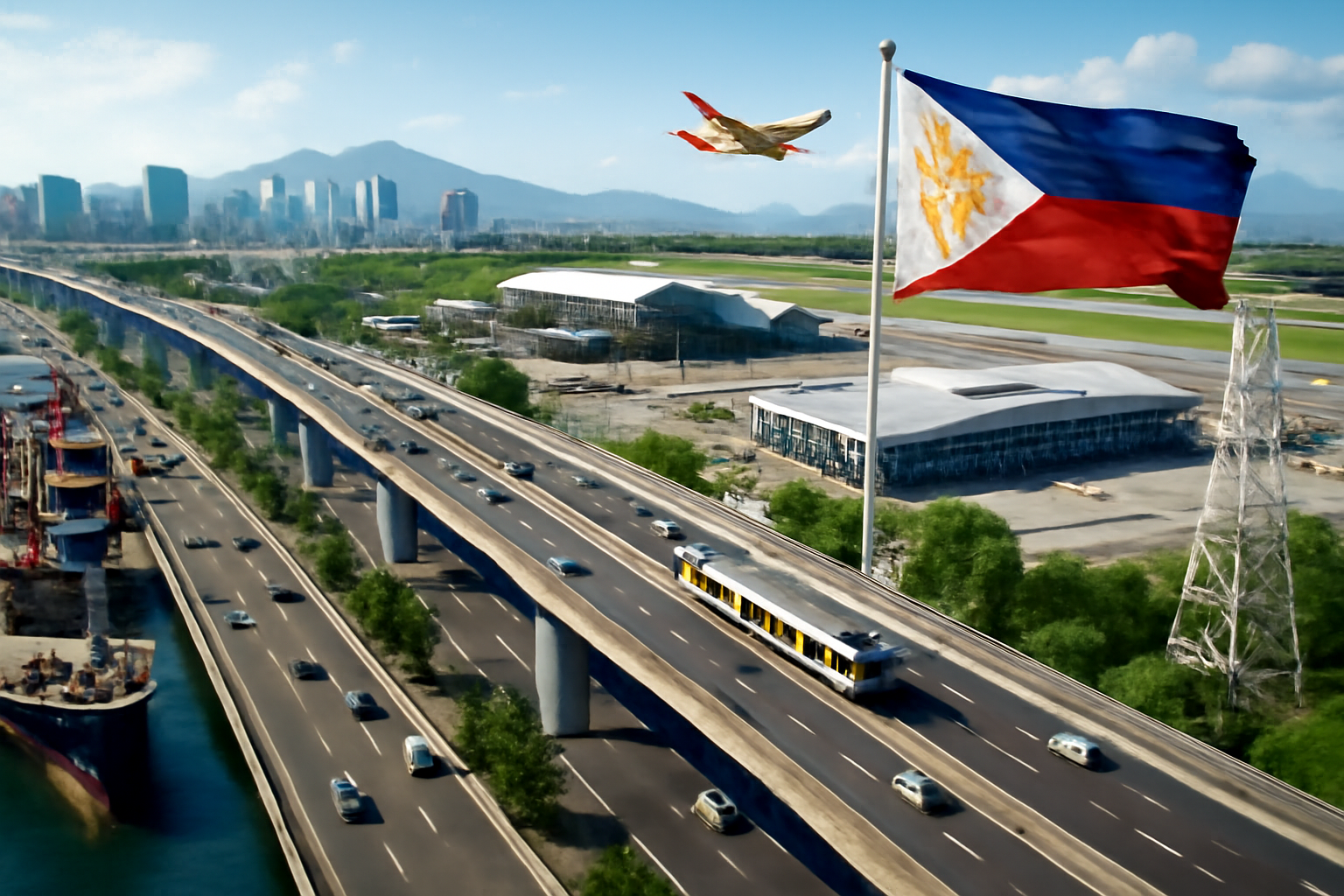
Infrastructure development plays a critical role in improving the Philippines’ national connectivity and mobility. As a nation composed of thousands of islands, the government faces unique challenges in linking its regions. Nevertheless, the ongoing infrastructure projects under the Build, Build, Build program are helping the country address these challenges by modernizing roads, rail systems, airports, and seaports to facilitate easier movement of people and goods.
One of the most visible infrastructure developments is the expansion of the road network. Traffic congestion in Metro Manila and other major urban centers has been a persistent issue, leading to delays and economic inefficiencies. To ease this, the government has focused on improving expressways, highways, and bridges to better connect provinces to the capital. For example, the Cavite-Laguna Expressway (CALAX) and the Tarlac-Pangasinan-La Union Expressway (TPLEX) provide faster and more efficient routes between key provinces, benefiting both commuters and businesses.
Improving airports and seaports is another significant aspect of the government’s infrastructure strategy. Major airports such as Ninoy Aquino International Airport (NAIA) have been undergoing modernization to accommodate a higher volume of passengers, while regional airports like those in Cebu, Davao, and Clark are also receiving upgrades to improve air travel and promote regional tourism. Furthermore, seaports in key areas like Batangas and Cebu are being expanded to handle larger vessels and increase cargo traffic, which is essential for maintaining efficient trade and logistics.
Rail development is a central component of improving mobility. The government is working on a variety of rail projects, with the Metro Manila Subway being one of the most significant. This subway system is designed to reduce traffic congestion in Metro Manila by providing a faster and more efficient mode of transportation. Furthermore, the expansion of the North-South Commuter Railway, which will link Metro Manila to nearby provinces, will allow residents of those areas to easily commute to the capital.
In addition to transportation infrastructure, the Philippines is also investing in energy and telecommunications. A reliable power supply is essential to keep transportation networks operational, and the expansion of telecommunications infrastructure ensures better access to the internet, benefiting both urban and rural populations. Improved internet access is especially important in the digital age, as it enables better communication, business opportunities, and access to services.
Despite these positive developments, the Philippines still faces challenges, such as traffic congestion and vulnerability to natural disasters. However, with ongoing investment and resilience in infrastructure planning, the country is making significant strides toward improved connectivity and mobility, which will ultimately lead to long-term economic growth and a better quality of life for all Filipinos.