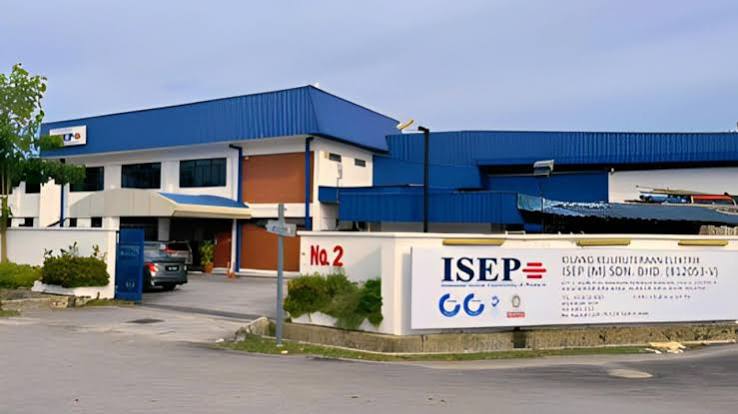
ISEP (M) Sdn Bhd, a Malaysia-based industrial solutions provider specialising in explosion-proof equipment, highlights the growing challenges of aging electrical equipment across Southeast Asia. Announced on 6 November 2026, the initiative focuses on oil and gas, refinery, petrochemical, and offshore facilities.
Aging equipment, corrosion, and missing certification records create safety concerns and costly replacement challenges for industrial operators. ISEP highlights that not all aging explosion-proof equipment necessarily requires replacement, as certain equipment may remain suitable for continued use following proper technical assessments.
Through IEC 60079-17:2023 Annex C guidance, ISEP raises awareness of fitness-for-purpose assessments that help industrial operators make informed equipment decisions. This approach can potentially reduce unnecessary replacement costs, minimise operational downtime, and support sustainability while maintaining industrial safety and regulatory compliance.
Managing Aging Explosion-Proof Equipment in Southeast Asia: ISEP Highlights an Alternative to Total Replacement
SELANGOR, MALAYSIA, 6 November 2026 – Aging explosion-protected (Ex) electrical equipment presents an increasing asset integrity challenge for established industrial facilities across Southeast Asia. Decades of exposure to tropical humidity, coastal conditions, corrosive chemicals, and demanding environments can affect hazardous-area electrical installations.
Beyond physical deterioration, missing certificates of conformity, unreadable equipment markings, and incomplete technical records can make it difficult to determine whether older Ex equipment remains suitable for operation.
ISEP (M) Sdn Bhd, a Malaysia-based industrial solutions provider specialising in explosion-proof applications, highlights the importance of a structured, standards-based approach to managing aging equipment.
IEC 60079-17:2023 Annex C provides guidance on fitness-for-purpose assessments for certain existing Ex equipment where conformity documentation is unavailable or cannot be verified.
Across Malaysia, Indonesia, Singapore, Thailand, and other Southeast Asian markets, many oil and gas installations, refineries, petrochemical facilities, and offshore assets have operated for decades.
Explosion-protected junction boxes, motors, lighting fixtures, control stations, and electrical enclosures may experience corrosion, damaged seals, mechanical deterioration, or weathered identification markings.
Tropical humidity, salt-laden air, rainfall, and chemical exposure may accelerate deterioration. Changes in plant ownership, equipment modifications, and legacy documentation practices can also result in missing certificates, manufacturer instructions, and engineering drawings.
Without reliable records, maintenance teams may struggle to verify equipment’s original explosion-protection characteristics or suitability for its hazardous-area classification.
This raises an important question: Does every aging Ex component require replacement, or can certain equipment be retained following competent technical assessment?
Why Total Equipment Replacement May Not Always Be Necessary
Equipment suffering unacceptable deterioration or failing to provide required explosion protection must undergo corrective measures, including replacement where necessary.
However, replacement solely due to age or missing documentation may not always be the most proportionate engineering decision.
Large-scale replacement programmes involve significant capital expenditure, procurement periods, and operational shutdowns. New equipment may also require modifications to mounting arrangements, cable entries, wiring, and associated infrastructure.
These challenges are particularly significant for facilities containing numerous legacy hazardous-area components.
Condition-based assessments can help distinguish equipment requiring replacement from assets suitable for continued service, provided safety and compliance are adequately demonstrated.
IEC 60079-17 Annex C: Understanding Fitness-for-Purpose Assessment
Published by the International Electrotechnical Commission (IEC), IEC 60079-17:2023 – Explosive atmospheres, Part 17: Electrical installations inspection and maintenance establishes requirements for inspecting and maintaining hazardous-area electrical installations.
Its informative Annex C describes fitness-for-purpose assessments when certificates of conformity are unavailable or their origin cannot be established.
The objective is to develop sufficient technical evidence to evaluate whether existing equipment provides appropriate safety for its intended application.
Depending on equipment type, condition, and available information, assessments may involve:
1. Equipment Identification and Design Evaluation
Equipment construction, operating characteristics, and explosion-protection concepts must be examined.
Relevant protection methods include flameproof enclosures (Ex d), increased safety (Ex e), and intrinsic safety (Ex i).
Evaluations determine whether equipment characteristics meet installed-location and hazardous-area requirements.
2. Technical Inspection, Testing, and Measurements
Competent personnel may perform inspections, measurements, calculations, or tests to evaluate critical safety characteristics.
These may include flameproof joint dimensions and condition, electrical insulation, earthing continuity, and enclosure integrity.
Testing must suit the protection concept and use appropriate procedures and equipment. Not every test is relevant or safe for every Ex equipment type.
3. Installation and Accessory Compatibility
Assessments may examine cable glands, conduit seals, electrical connections, and other installation interfaces.
Even suitable Ex enclosures may present safety concerns if associated components or installation arrangements are incompatible with their explosion-protection methods.
4. Engineering Documentation and Technical Reporting
Fitness-for-purpose assessments require documented technical justification.
Reports may include design specifications, inspection findings, measurements, calculations, limitations, and assessor conclusions.
These records establish traceability and support decisions regarding continued equipment use.
5. Equipment Identification and Traceability
Equipment identification linked to assessment records helps operators maintain accurate Ex registers and improve long-term maintenance practices, particularly where historical information is incomplete.
Importantly, fitness-for-purpose assessment does not constitute new IECEx or ATEX certification.
Annex C provides informative guidance, potentially restricted by national regulations. Equipment suitability must be demonstrated through competent assessment and technical evidence, not assumed from a completed report.
Engineering Competency and Quality Systems Remain Essential
Managing explosion-protected equipment requires specialist knowledge, sound engineering practices, and reliable documentation.
Established in 2014 by engineers, ISEP (M) Sdn Bhd evolved from a process automation integrator into an industrial solutions provider specialising in explosion-proof applications.
Its activities include engineering, equipment selection, procurement, fabrication, testing, commissioning, and related hazardous-area technical services.
ISEP maintains an ISO 9001:2015-certified quality management system covering systems integration, design, manufacturing, assembly, wiring, testing, commissioning, and inspection of Ex equipment in potentially explosive environments.
The company also holds an IECEx Quality Assessment Report (QAR) and an ATEX Production Quality Assurance Notification issued by DNV for specified explosion-protected control panel manufacturing activities.
These credentials demonstrate involvement in quality-controlled hazardous-area engineering and manufacturing.
However, they do not replace personnel competency requirements or establish specific authorisation to conduct IEC 60079-17 Annex C fitness-for-purpose assessments.
Decisions affecting explosion protection must involve appropriately qualified personnel, documented evidence, and compliance with applicable regulations.
Supporting More Effective Asset Lifecycle Management
Structured equipment evaluation helps industrial facilities improve maintenance planning and investment decisions.
Where equipment remains demonstrably suitable, continued use may avoid unnecessary procurement, installation modifications, and operational disruption.
This approach can direct maintenance resources towards higher-risk assets while potentially reducing material consumption and industrial waste, depending on equipment condition and available alternatives.
Nevertheless, safety must take priority over financial considerations.
Where explosion-protection integrity is compromised or cannot be demonstrated, appropriate corrective action is required. Repair and overhaul may also fall under relevant standards, including IEC 60079-19.
Strengthening Hazardous-Area Safety Across Southeast Asia
As Southeast Asia’s energy and processing facilities mature, managing aging Ex equipment remains critical for plant owners, maintenance teams, and asset integrity professionals.
The central consideration is not equipment age alone, but whether it continues providing the required protection for its operating environment.
IEC 60079-17 Annex C offers technical guidance for evaluating certain legacy Ex equipment when original certification documentation is unavailable.
Aligned with its vision of contributing towards an environment free from explosions, ISEP promotes established engineering practices, international standards, and responsible asset lifecycle management.
Through informed equipment evaluation and sound engineering, ISEP seeks to support safer, more sustainable industrial operations across Malaysia and Southeast Asia.
This press release has also been published on VRITIMES