Malaysia’s automotive industry has a unique identity compared with many other markets in Southeast Asia because it was built around the development of national automotive manufacturers. Proton and Perodua have played a central role in shaping Malaysia’s vehicle market, supporting industrial growth, creating local expertise, and establishing a strong automotive supply chain.
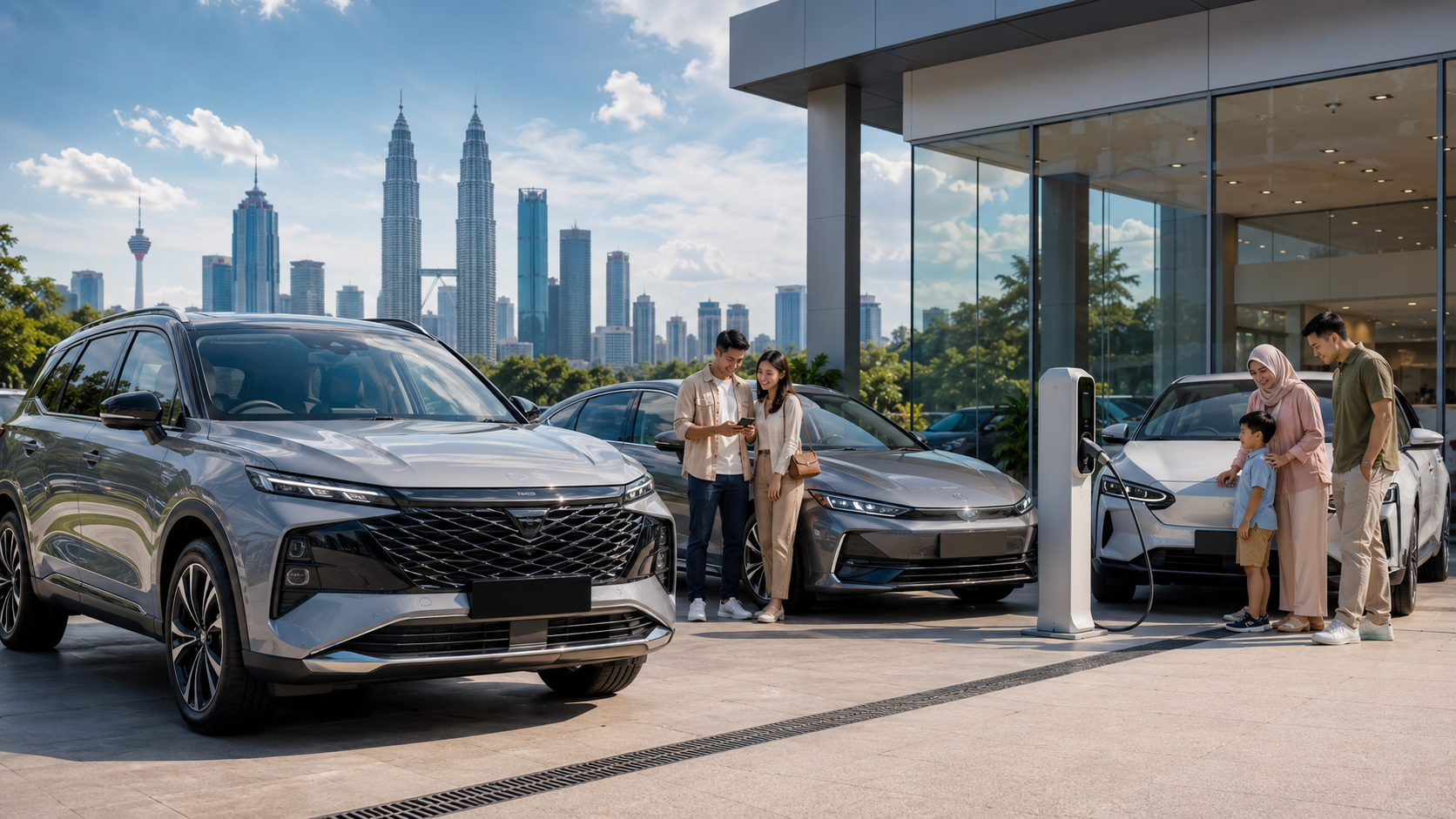
However, the automotive landscape is changing rapidly. The rise of electric vehicles, smart technologies, and global competition is challenging traditional manufacturers to transform their strategies. Proton and Perodua are now moving beyond conventional vehicle production and adapting to a future defined by digital technology, sustainability, and advanced mobility solutions.
The development of Malaysia’s automotive sector is closely monitored by the Malaysian Automotive Association (MAA), which provides industry statistics and market updates:
https://www.maa.org.my/
Proton: Transforming Malaysia’s First National Car Brand Into a Global Competitor
Proton was established in 1983 as Malaysia’s first national automotive manufacturer with the objective of developing domestic automotive capabilities.
The company became a symbol of Malaysia’s industrial ambition by creating local engineering knowledge, manufacturing experience, and automotive employment opportunities.
During its early development, Proton focused on building affordable vehicles for Malaysian consumers while gradually improving its engineering capabilities. The brand achieved significant recognition through models such as the Proton Saga, which became one of Malaysia’s most recognizable vehicles.
However, increasing competition from international brands required Proton to undergo major transformation.
The partnership between Proton and Geely became a turning point in the company’s development. Through this collaboration, Proton gained access to advanced automotive platforms, modern design capabilities, and international technology resources.
This partnership helped Proton introduce more competitive models featuring:
- Advanced safety systems
- Modern infotainment technology
- Improved vehicle design
- Better manufacturing efficiency
The transformation demonstrates how local automotive companies can use global partnerships to strengthen competitiveness.
Perodua’s Success Through Consumer-Focused Vehicle Strategies
While Proton represents Malaysia’s early automotive ambition, Perodua has become one of the strongest examples of successful local automotive adaptation.
Founded in 1993, Perodua built its reputation by focusing on affordable, practical, and efficient vehicles suitable for Malaysian consumers.
The company’s success comes from understanding several important market factors:
- Urban transportation needs
- Affordable ownership costs
- Fuel efficiency concerns
- Low maintenance requirements
Vehicles such as the Perodua Myvi, Axia, and Bezza have become popular because they provide practical solutions for everyday drivers.
Perodua’s ability to maintain strong consumer trust demonstrates the importance of understanding local market behavior.
Unlike premium automotive competition, Perodua’s strategy focuses on accessibility, making vehicle ownership possible for a wider segment of Malaysian society.
The Challenge of Entering the Electric Vehicle Era
The global automotive industry is experiencing a major shift toward electrification, and Malaysia’s national manufacturers must adapt quickly.
Electric vehicles require different technologies compared with traditional cars. Manufacturers must develop capabilities in:
- Battery systems
- Electric powertrains
- Software integration
- Charging technology
- Digital vehicle platforms
For Proton, its relationship with Geely provides an advantage because Geely has already invested significantly in electric mobility technology.
This cooperation allows Proton to explore electrification opportunities while benefiting from global automotive research and development.
Perodua faces a different challenge because its strength is based on affordability. Developing EVs that remain accessible to Malaysian consumers will require careful cost management and technology planning.
The success of affordable EV adoption could become a major factor in Malaysia’s future automotive growth.
How National Brands Are Responding to Modern Consumer Expectations
Malaysian consumers are changing how they evaluate vehicles.
Previously, buyers mainly considered:
- Price
- Fuel consumption
- Reliability
- Maintenance costs
Today, consumers increasingly look for:
- Digital connectivity
- Advanced safety features
- Smart driving assistance
- Environmentally friendly technology
- Modern design
Proton and Perodua must therefore compete not only with traditional manufacturers but also with technology-focused EV brands entering Malaysia.
The ability to combine affordability with advanced features will determine their future market position.
Government Support for Malaysia’s Automotive Transformation
Malaysia’s automotive development is supported by government strategies designed to strengthen industrial competitiveness.
The New Industrial Master Plan 2030 (NIMP 2030) highlights the importance of advanced manufacturing, technology adoption, and high-value industries, including automotive innovation.
Information about Malaysia’s industrial strategy is available through MITI:
Government support plays an important role in encouraging investment, developing infrastructure, and supporting the transition toward sustainable mobility.
The Future Direction of Proton and Perodua
The future of Malaysia’s national automotive brands depends on their ability to evolve.
Proton must continue strengthening technology partnerships and expanding its capabilities in smart and electric vehicles.
Perodua must maintain its market advantage while finding ways to introduce future mobility solutions at affordable prices.
Both companies represent an important part of Malaysia’s automotive identity. Their transformation will influence not only the domestic market but also Malaysia’s position within the ASEAN automotive industry.
As the automotive world moves toward electrification and intelligent transportation, Proton and Perodua have the opportunity to redefine what national car manufacturers can achieve in the modern era.