Bicol’s P500-Million Cold Storage Complex Switches On
The hum of industrial compressors in Pili, Camarines Sur, in March 2026 marked more than the opening of another government facility. The Bicol Mega Cold Storage Warehouse, built with a P500-million investment, is the first completed project under the DA Cold Storage Expansion Program and carries a combined annual capacity exceeding 200,000 tons across temperature-controlled rooms calibrated for pork, beef, poultry, fish, fruits, and vegetables.
For Bicol’s farmers, the facility addresses a familiar trap: without reliable cold storage, perishable harvests must be sold immediately at whatever price buyers offer, or they spoil. The complex includes blast-freezing, processing, and packaging rooms, allowing producers to extend shelf life, meet market standards, and negotiate from a stronger position. Governor Luis Raymund Villafuerte said the hub will serve not only Bicol but also suppliers from the Visayas and Mindanao, reinforcing the region’s role as a food corridor.
Solar, Wind, and Batteries for Off-Grid Municipalities
The same policy logic is being tested at a smaller, more decentralized scale. In October 2026, the DA opened solar- and wind-powered modular cold storage facilities in San Jose, Garchitorena, Lagonoy, and Tigaon, all in Camarines Sur, with a combined cost of P45.5 million. The San Jose unit combines 30 solar panels rated at a minimum of 700 watts each, a three-kilowatt wind turbine, a lithium-ion battery bank with at least 160 kilowatt-hours of capacity, and a 25-kilowatt diesel backup generator.
The engineering is deliberately adapted to a typhoon-prone geography. The 40-foot storage unit is designed for a structural wind-load target of 350 kilometers per hour, and its wind turbine is separately rated for speeds up to 315 kilometers per hour. Operating temperatures of +1°C to +10°C accommodate vegetables, pineapple, sweet potato, and other high-value crops, while washing, processing, loading, and staging areas improve handling before distribution.
Who Actually Benefits
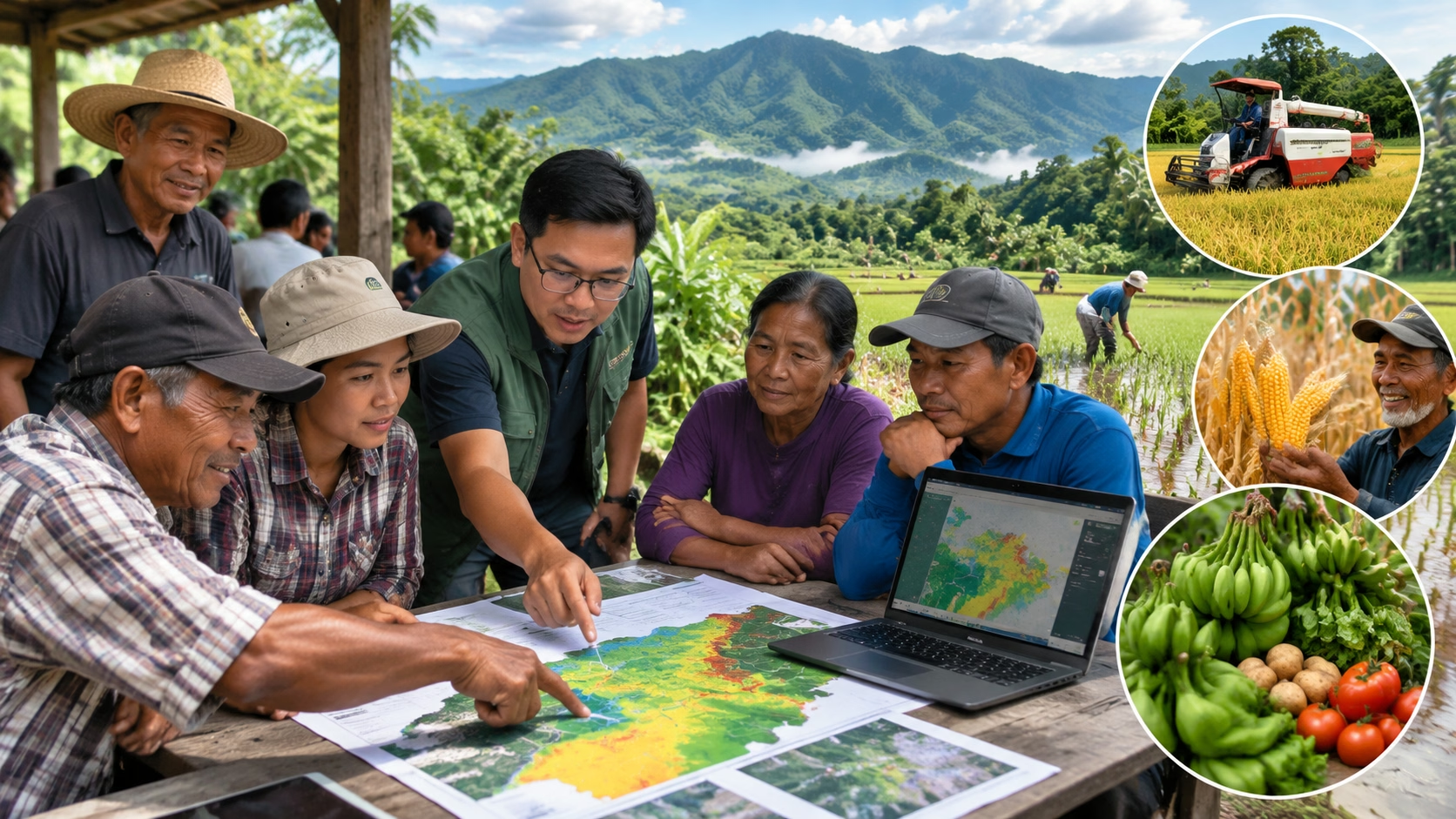
The four modular facilities are expected to benefit more than 10,762 farmers, fisherfolk, and other food producers across 10 towns in Camarines Sur. The DA also distributed P79.6 million worth of complementary interventions, including a 4WD tractor, a combine harvester, seeds, garden tools, boats, and fishing gear. Agriculture Secretary Francisco P. Tiu Laurel Jr. described the investments as livelihood instruments: “By reducing post-harvest losses, improving meat-handling services and connecting local producers to better markets, we can help them earn more from their hard work”.
The facilities sit within the Philippine Food Chain Logistics Master Plan 2023–2033, which seeks to connect production areas to consumer markets through better storage and transport links. Some 67 modular cold storage units were reported to be under construction, procurement, or pre-implementation as of mid-2026, suggesting that the model is moving from demonstration projects toward a distributed national network.
The Operational Test Ahead
Cold storage only creates value if it is used, maintained, and powered reliably. The renewable hybrid design reduces operating costs that have historically made cold chains expensive in rural areas, but utilization rates, spare-parts availability, and local management capacity will determine whether the facilities function as income-protecting infrastructure or as underused assets. The early signal from Camarines Sur is that the government is betting on a network model—large hubs for volume, modular units for dispersed production—rather than a single flagship facility.