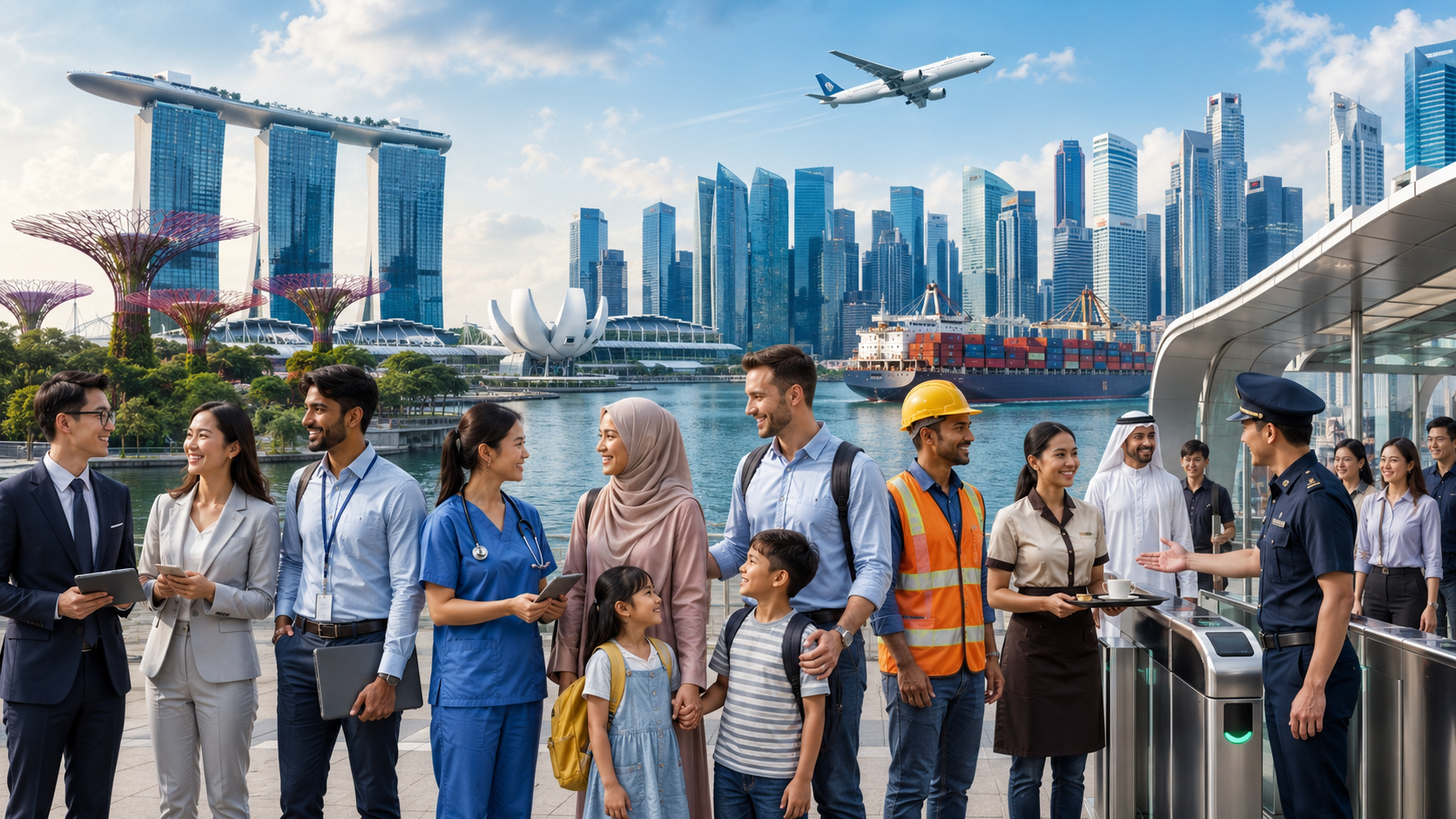
Singapore’s immigration framework is closely tied to its long-term survival as a small but highly developed nation. With limited natural resources and a compact land area, the country relies heavily on human capital to sustain economic growth and maintain global competitiveness. Immigration is therefore not treated as an isolated administrative process, but as a strategic instrument that supports economic sustainability while maintaining social balance.
A central objective of the system is to ensure that the labor market remains flexible and responsive to global demand. Singapore attracts foreign professionals in high-value industries such as finance, information technology, pharmaceuticals, engineering, and research. These individuals are selected based on qualifications, work experience, and salary benchmarks that reflect their expertise. Their presence helps multinational corporations establish regional headquarters in Singapore and supports the country’s reputation as a knowledge-based economy.
At the same time, immigration policy is carefully structured to avoid overreliance on foreign labor. The government regularly adjusts quotas, eligibility criteria, and levies to manage the inflow of workers. Employers are encouraged to invest in automation and productivity improvements rather than depending solely on manpower expansion. This approach ensures that economic growth is not achieved at the expense of wage stagnation or job displacement among local workers.
Lower-skilled and mid-skilled foreign workers also play an essential role in Singapore’s economy. They are commonly employed in sectors such as construction, eldercare, hospitality, cleaning services, and shipyards. These roles are necessary for the functioning of the city-state, yet they are tightly regulated. Work permits are subject to employer responsibility, sector-specific quotas, and strict compliance requirements. These measures help maintain equilibrium between economic demand and social capacity.
Beyond economics, Singapore places strong emphasis on maintaining social cohesion in a densely populated urban environment. The country’s multicultural society depends on mutual respect between different ethnic and religious groups. Immigration introduces additional cultural diversity, which can enrich society but also requires structured integration efforts. Schools, community centers, and workplaces are important spaces where newcomers interact with locals and develop shared norms.
The transition from foreign worker to permanent resident or citizen is deliberately selective. Authorities evaluate factors such as income stability, professional contribution, length of residence, family integration, and alignment with Singapore’s civic values. This ensures that those who settle permanently are likely to remain committed to the country’s long-term development.
Immigration enforcement remains strict to preserve system integrity. Regulations against overstaying, illegal employment, and fraudulent documentation are enforced through monitoring systems and penalties. This reinforces public confidence that immigration is managed in a controlled and transparent manner.
Singapore’s immigration model demonstrates how a small nation can remain open to global talent while carefully regulating population inflow. The system is designed to support economic resilience, preserve social harmony, and ensure that growth remains sustainable over time.