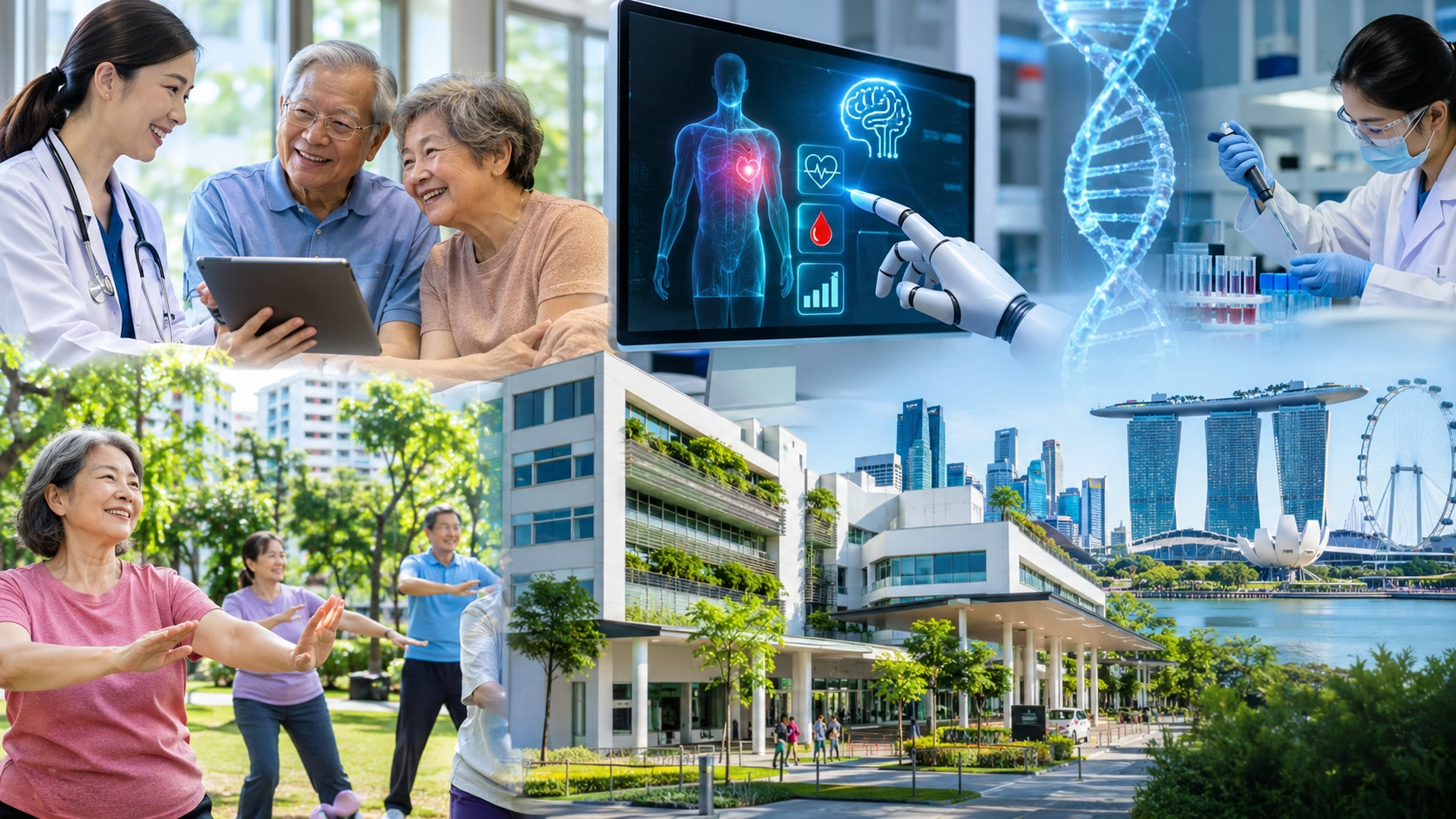
The future of healthcare in Singapore is increasingly being shaped by technologies that allow medical professionals to understand individual health risks before serious illnesses develop. During 2026, the country’s healthcare institutions are strengthening their focus on artificial intelligence, genomic analysis and integrated care services.
These developments represent a broader transition from reactive treatment towards predictive and personalised medicine. Instead of depending exclusively on hospital-based services, Singapore is building a healthcare ecosystem that connects advanced scientific research with family doctors and community providers.
Genomic Research Opens a New Chapter in Healthcare
One of Singapore’s most ambitious medical initiatives is the National Precision Medicine programme, which seeks to incorporate genetic information into future healthcare decisions.
Under Phase III, researchers plan to recruit another 400,000 to 450,000 participants for whole-genome sequencing, in addition to more than 100,000 residents whose genomes were sequenced under the previous phase.
The programme aims to improve understanding of genetic variations associated with different diseases, particularly among Singapore’s multi-ethnic population.
By examining these relationships, researchers hope to develop more effective approaches to disease prevention, diagnosis and personalised treatment.
At a precision health event on 1 October 2026, Health Minister Ong Ye Kung highlighted familial hypercholesterolaemia, an inherited condition associated with dangerously high cholesterol, as an early clinical application of genomic testing.
He also announced plans to introduce another clinical use case for hereditary breast and ovarian cancer in December 2026.
The development demonstrates how Singapore intends to translate genetic research into practical medical services rather than treating genomic sequencing as an isolated scientific achievement.
These initiatives were detailed in the Ministry of Health’s official precision health policy speech.
Artificial Intelligence Improves Preventive Screening
Another significant innovation is ACE-AI, an artificial intelligence system developed by Synapxe to support early detection of chronic diseases.
The technology assesses patient information, including age and previous medical conditions, to estimate the likelihood of developing diabetes or high cholesterol within three years.
Individuals identified as high risk have a predicted probability above 75% of receiving either diagnosis during that period.
Singapore plans to introduce the tool from early 2027 across participating primary healthcare facilities.
The system will help doctors identify eligible Healthier SG patients who may benefit from annual subsidised cardiovascular-risk screening instead of screening every three years.
Importantly, AI-generated predictions are intended to support clinical decisions rather than replace medical professionals.
Healthier SG Strengthens Patient-Centred Medical Services
Technology-driven healthcare depends on accessible primary medical services.
Healthier SG provides this foundation by encouraging residents to maintain long-term relationships with family doctors and follow personalised health plans.
By August 2026, approximately 1.5 million residents had registered for the programme, representing 61% of eligible individuals.
National survey results also showed chronic disease screening participation increasing from 62.6% in 2023 to 71.5% in 2025.
The programme therefore provides an established network through which future digital health innovations could reach patients.
Community Care Supports an Ageing Population
Singapore is also expanding Age Well Neighbourhoods in Toa Payoh, Bedok, Bukit Panjang and Tiong Bahru-Redhill.
These initiatives are expected to support more than 110,000 seniors through neighbourhood health posts, home care and active-ageing programmes.
Together, medical research, artificial intelligence and community services are changing how Singapore approaches healthcare delivery. The country’s emerging model places increasing importance on identifying health risks early, coordinating treatment and helping patients maintain their quality of life over time.