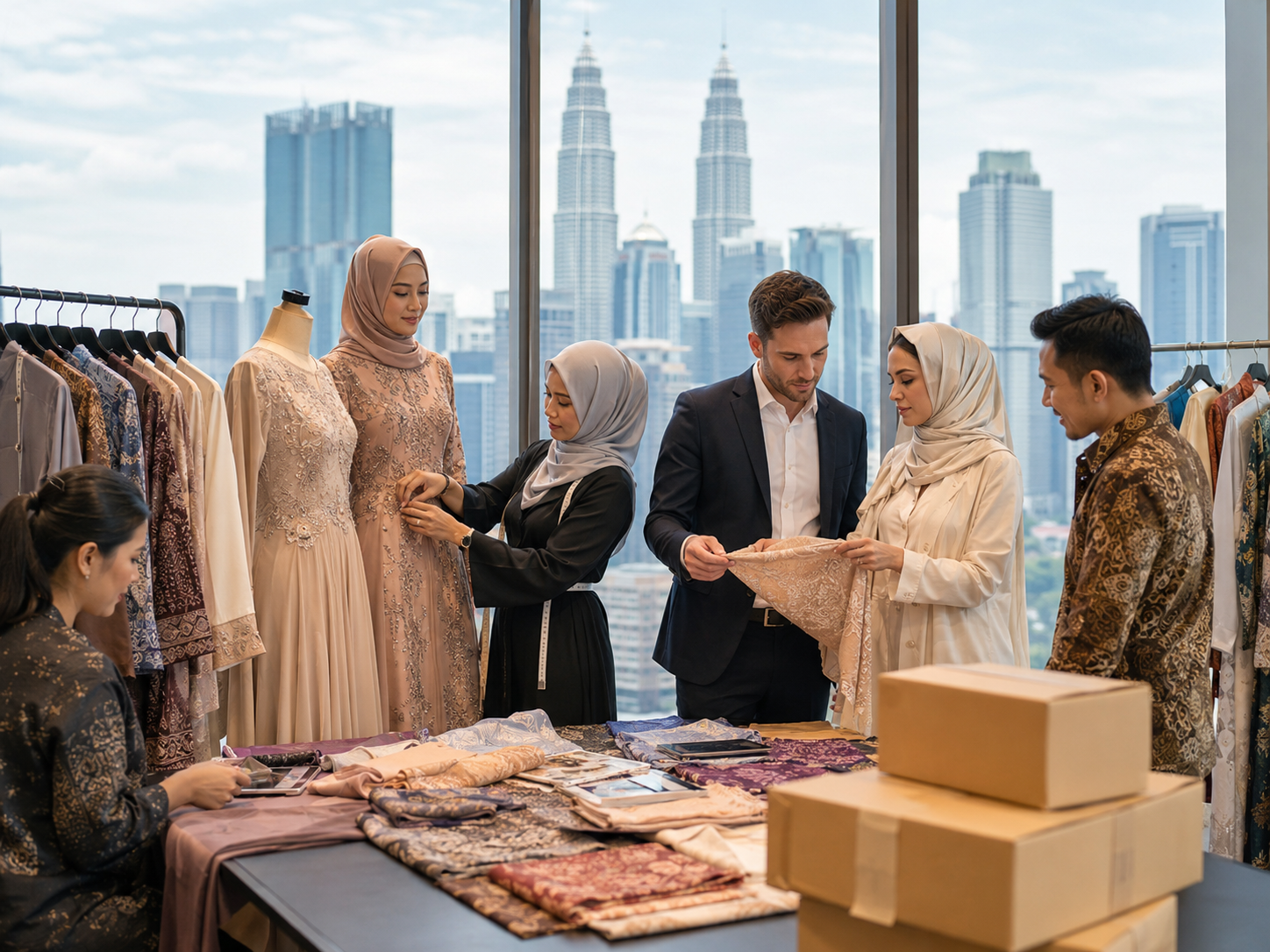
The Gulf region’s fashion buyers have long sourced couture from Paris, Milan, and Beirut. In recent seasons, however, a new origin has begun appearing on labels: Kuala Lumpur. Malaysian designers are winning Middle Eastern clients by offering something distinct—heritage textiles reinterpreted into modest luxury garments.
The Gulf’s Expanding Modest Luxury Market
Middle Eastern consumers spend heavily on occasion wear, bridal couture, and exclusive ready-to-wear. Demand for modest luxury continues to grow, particularly in Saudi Arabia, the UAE, and Qatar. Malaysian brands are entering this space with collections that respect cultural dress codes while offering fresh Southeast Asian aesthetics. The result is a niche that feels both familiar and novel to Gulf buyers.
Heritage Textiles as Status Symbols
Songket, batik, and tenun carry deep cultural significance in Malaysia. In Gulf markets, these textiles are increasingly perceived as artisanal and exclusive. Rizman Ruzaini’s couture gowns often feature hand-woven songket panels paired with crystal embellishment, a combination that appeals to clients who value craftsmanship and rarity. Innai Red applies similar textile storytelling to modest bridal wear, creating pieces that stand out in Dubai’s crowded wedding market. The ability to explain the provenance of a fabric adds value that machine-made European lace cannot always match.
Designer Case Studies: Rizman Ruzaini and Innai Red
Rizman Ruzaini has built a strong following among Middle Eastern royalty and regional celebrities. Their made-to-measure process includes multiple fittings, fabric sourcing from Terengganu, and hand-finishing in Kuala Lumpur. Innai Red, meanwhile, focuses on bridal and formal modest wear for Gulf clients who want coverage without sacrificing drama. Both labels leverage Instagram and private showroom appointments to maintain exclusivity and build direct relationships with buyers. MIDA’s official fashion and textile sector page notes that Malaysian companies are increasingly using design-driven exports to reach high-value international markets. The overview is available here: https://www.mida.gov.my/.
Trade Routes and Showroom Strategies
Rather than relying solely on fashion weeks, Malaysian designers are opening temporary showrooms in Dubai and Riyadh during peak shopping seasons. These pop-ups allow clients to touch fabrics, try on samples, and place orders without traveling to Malaysia. Some brands also collaborate with Gulf-based multi-brand boutiques that understand local sizing and styling preferences. This hybrid model—digital discovery plus physical showroom—has proven effective for high-ticket garments where fit and fabric feel are critical.
Managing Production for Premium Buyers
High-end Gulf clients expect fast turnaround for custom pieces and flawless finishing. Malaysian ateliers must balance this with limited skilled labor and imported materials. Many designers are investing in in-house embroidery teams and digital pattern making to reduce errors and speed up production. Some are also sourcing more embellishments from regional suppliers to shorten lead times. These operational improvements are necessary to protect margins and deliver the quality that Gulf buyers expect.