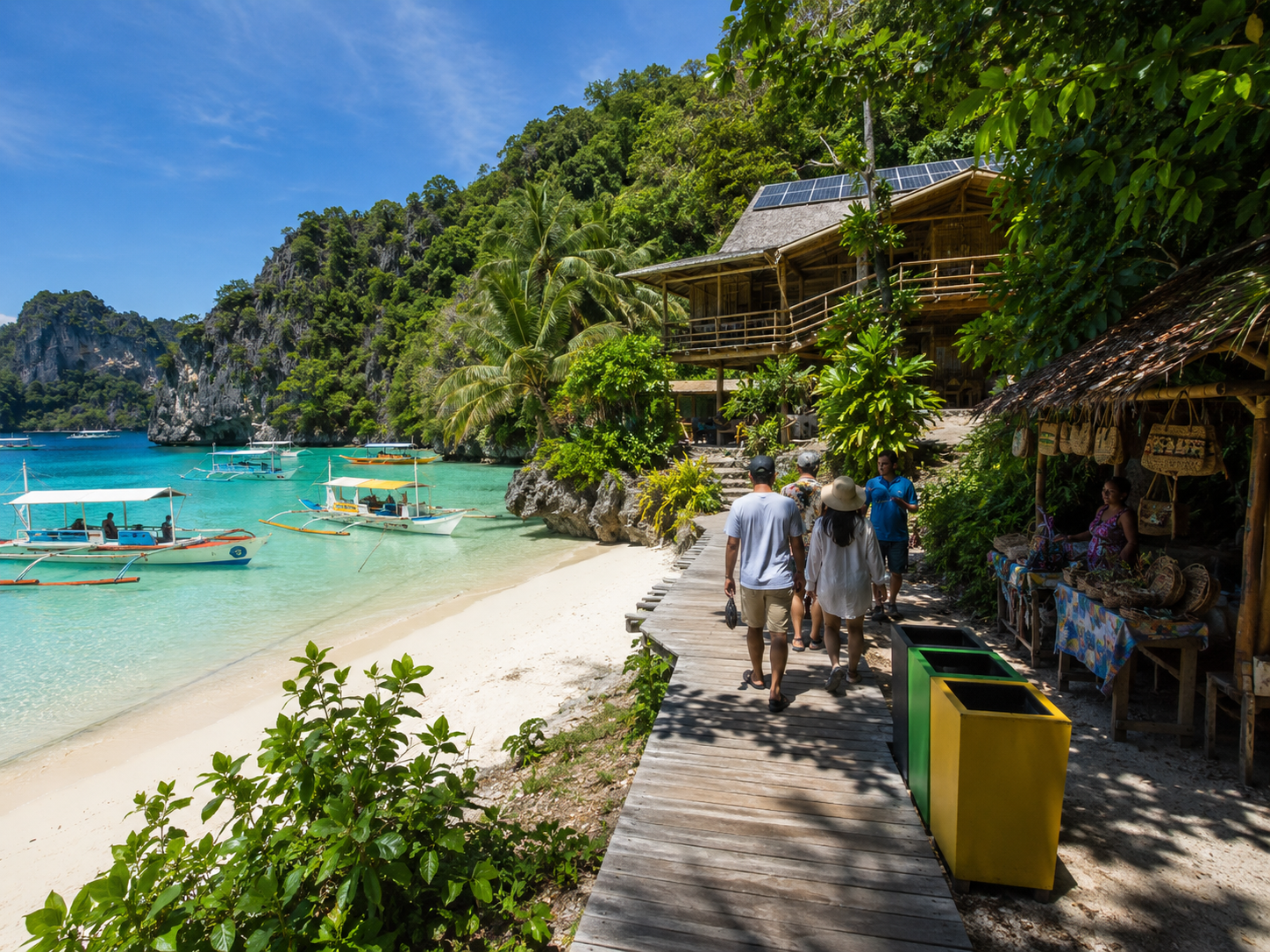
The Philippines has entered a new phase of tourism development where sustainability is becoming as important as economic expansion. With more than 7,000 islands, the country possesses extraordinary tourism resources, from world-famous beaches to protected forests and marine ecosystems.
However, increasing visitor demand has created complex challenges. Popular destinations must now manage environmental concerns, infrastructure limitations and community expectations while continuing to attract travelers from around the world.
Sustainable tourism development offers a pathway to maintain tourism competitiveness without exhausting natural and cultural resources.
The United Nations World Tourism Organization highlights sustainable tourism as a development approach that considers environmental, economic and social impacts:
https://www.unwto.org/sustainable-development
Environmental Protection Becomes a Tourism Priority
Many Philippine destinations depend heavily on nature-based tourism. Beaches, coral reefs, waterfalls and forests are the foundation of local tourism economies.
When these resources decline, tourism businesses also face significant risks.
Coastal pollution, excessive construction and poor waste management can reduce destination quality and damage international reputation.
This has encouraged many destinations to adopt stronger environmental practices, including improved waste systems, conservation programs and restrictions on harmful activities.
Boracay’s rehabilitation remains one of the strongest examples of how environmental issues can influence national tourism policies.
The island’s recovery emphasized that tourism growth must be supported by adequate infrastructure and environmental management.
Technology Supporting Smarter Tourism Management
Innovation is becoming an important component of sustainable tourism strategies in the Philippines.
Digital platforms, online booking systems and visitor monitoring technologies can help destinations better understand tourism patterns.
Instead of allowing uncontrolled visitor concentration, local authorities can use data to manage tourist flows and protect sensitive areas.
Smart tourism solutions can also improve visitor experiences by providing information about responsible travel practices, environmental guidelines and alternative destinations.
Technology alone cannot solve every tourism challenge, but it can support better decision-making when combined with effective policies.
The Importance of Responsible Travelers
Tourists also play a significant role in creating sustainable destinations.
Responsible travel behavior includes reducing waste, respecting local cultures, following environmental regulations and supporting local businesses.
A growing number of travelers are now seeking experiences that provide meaningful connections with communities and nature rather than simply visiting popular attractions.
This shift creates opportunities for the Philippines to develop more sustainable tourism products, including ecotourism, cultural tourism and community-based experiences.
Creating Inclusive Tourism Growth
Sustainable tourism must ensure that economic benefits reach local populations.
Tourism development should create quality employment opportunities, support local entrepreneurs and strengthen community participation.
Small businesses often represent the cultural identity of destinations through local cuisine, handicrafts and traditional experiences.
Supporting these businesses allows tourism revenue to circulate within communities rather than benefiting only large companies.
The Future Direction of Philippine Tourism
The Philippines has the opportunity to become a leading example of sustainable island tourism in Asia.
Achieving this goal requires cooperation between government agencies, private businesses, local communities and travelers.
The future of tourism should not be measured only by the number of visitors arriving each year. It should also consider environmental health, community prosperity and the ability of destinations to remain attractive over the long term.
By combining conservation, innovation and inclusive development, the Philippines can build a tourism industry that benefits both present and future generations.