The Philippines is a country where cultural expression is most vividly seen through its festivals and traditions. These celebrations are not simply annual events but living practices that reflect the identity, history, and values of different communities across the archipelago. With influences from indigenous heritage, Asian trade, Islamic traditions, and centuries of Spanish colonization, Filipino festivals have developed into unique cultural experiences that combine spirituality, artistry, and community participation.
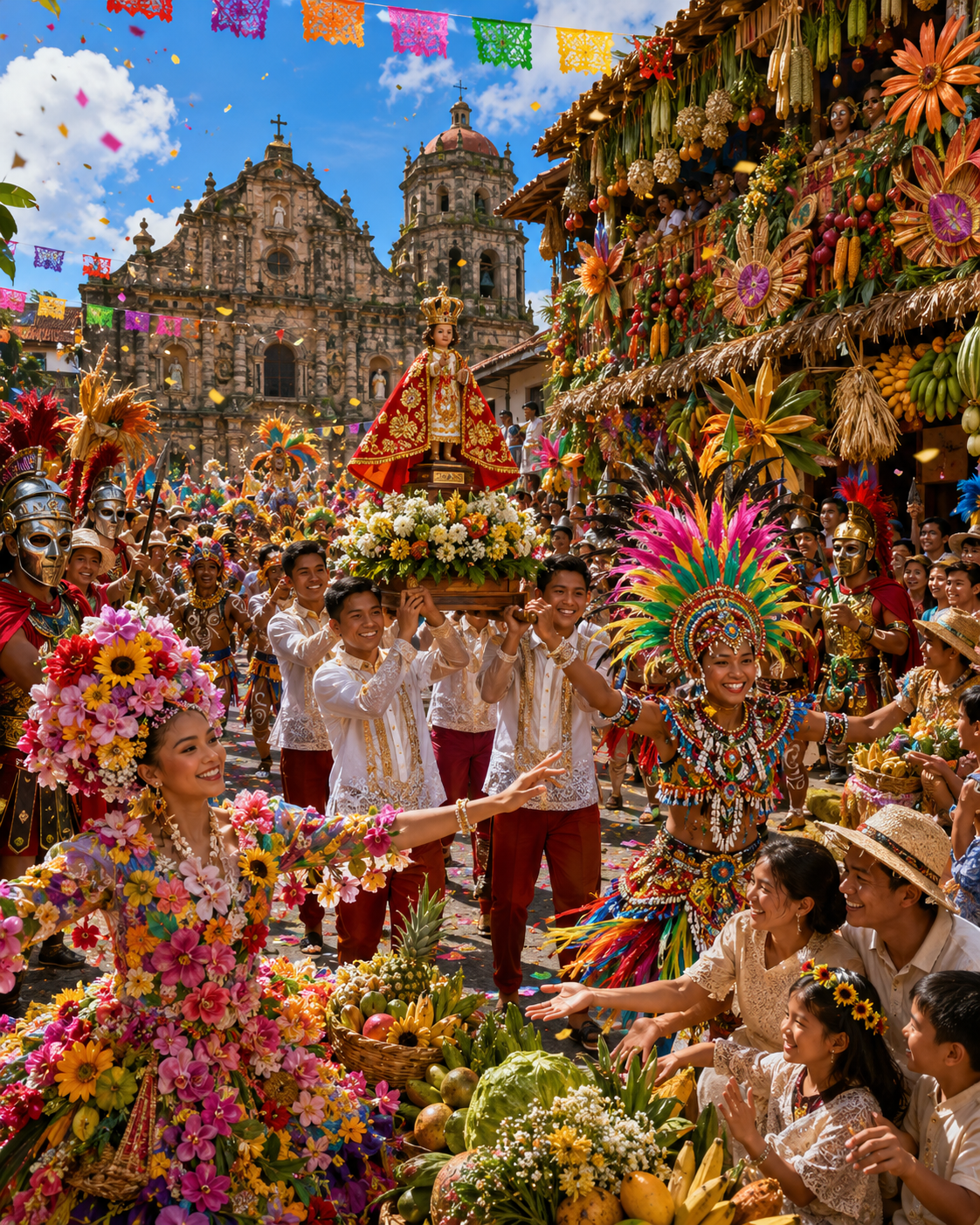
Religious devotion plays a central role in many festivals. One of the most recognized is the Sinulog Festival in Cebu, which honors the Santo Niño. The festival is characterized by street dancers performing rhythmic, forward-and-back steps that symbolize prayer and historical continuity. Accompanied by loud drums and vibrant costumes, the celebration attracts both local devotees and international visitors. Similarly, the Ati-Atihan Festival in Aklan combines Catholic devotion with indigenous remembrance. Participants cover their faces with black paint or soot, wear tribal-inspired attire, and move through the streets in energetic dance, creating a powerful blend of faith and cultural memory.
In Iloilo, the Dinagyang Festival highlights both religious devotion and artistic performance. Dance groups compete with choreographed routines that tell stories of faith and local heritage. The festival is known for its visual intensity, elaborate costumes, and synchronized movements, making it one of the most polished cultural showcases in the country.
Beyond religious celebrations, agricultural festivals play an important role in Filipino life. The Pahiyas Festival in Lucban, Quezon, is a thanksgiving event dedicated to a successful harvest. Homes are decorated with rice, fruits, vegetables, and colorful rice wafers called kiping. The entire town becomes a festive display of creativity and gratitude. In Mindanao, the Kadayawan Festival in Davao celebrates the blessings of nature, including fertile land, abundant produce, and cultural diversity. Indigenous groups participate in parades and cultural presentations, reinforcing the region’s rich heritage.
Another important aspect of Philippine festivals is their ability to reflect resilience. The MassKara Festival in Bacolod, known for its smiling masks and lively street dancing, was created during a period of economic and social challenges. Over time, it evolved into a symbol of optimism and collective strength, showing how communities use celebration as a form of emotional healing.
Everyday traditions also shape Filipino identity. Respect for elders is expressed through gestures such as “pagmamano,” while hospitality remains a defining cultural value. Families often gather for shared meals, especially during fiestas and holidays. The spirit of “bayanihan,” or communal cooperation, continues to influence how communities respond to challenges.
Through these festivals and traditions, Filipinos preserve their cultural identity while embracing change. Each celebration reflects a deep connection to history, faith, and community life.